It takes little imagination or experience for us end users to believe that edge computing will be important for gaming, as will virtual reality, given the importance of latency performance.
Tuesday, March 15, 2022

Sunday, March 13, 2022
Connectivity Providers Will Get 10% of Edge Computing Revenues
No matter where one looks--private 5G networking; internet of things or edge computing--it seems observers believe system integrators, hyperscale cloud computing suppliers, solution specialists and infrastructure providers are positioned to reap about 90 percent of revenue in those businesses.
Mobile platforms, for example, are being leveraged for private networking. Non-carrier 5G and networking offerings are gaining momentum, says Dan Bieler, Forrester principal analyst. By about 2025, perhaps 90 percent of private 5G revenue will be earned by hyperscalers, system integrators and solution providers, not telcos, predicts TBR.

“All major hyperscalers showcased (at Mobile World Congress) how they are getting more heavily involved in the networking arena,” says Bieler.
Google is working on network slicing on Android 12 for providing access to Google Cloud.
Microsoft’s Azure for operators is a 5G overlay on Azure cloud WAN where Microsoft’s internet backbone carries the customers’ traffic.
Amazon Web Services is offering private 5G solutions and cloud WAN and edge application offerings.
“A new threat for telcos is on the horizon,” says Bieler. Importantly, “the lines are blurring between cloud computing and networking.”
No matter the stumbles telcos routinely have had in attempting to diversify their business models, or wring more value out of their positions in value chains, such movement remains necessary, if exceedingly difficult.
Estimates for the total 5G opportunity range from $4 trillion to $6 trillion by 2030, says Dan Bieler, Forrester principal analyst. But the connectivity part accounts for only five percent to 10 percent of this opportunity.
You can see the pattern in forecasts of internet of things revenue in Africa and the Middle East.

Or look at “smart city” IoT revenue by platform.

In one sense, that should come as no surprise. Connectivity typically represents about 10 percent of market opportunity for any network-based product. The rest is devices, operating systems, platforms, enablement and applications.
To gain more than about 10 percent of the revenue upside, connectivity providers have to move outside that role. That never has proven easy, or successful.
Here We Go Again: Hyperscalers Will Displace Telcos
One big strategic change in the era of distributed, competitive, virtualized computing and networking is that the demarcation between industry participants is becoming more porous. That is to say, formerly-distinct roles are becoming less distinct.
“All major hyperscalers showcased (at Mobile World Congress) how they are getting more heavily involved in the networking arena,” says Dan Bieler, Forrester principal analyst.
Google is working on network slicing on Android 12 for providing access to Google Cloud.
Microsoft’s Azure for operators is a 5G overlay on Azure cloud WAN where Microsoft’s internet backbone carries the customers’ traffic.
Amazon Web Services is offering private 5G solutions and cloud WAN and edge application offerings.
“A new threat for telcos is on the horizon,” says Bieler. Importantly, “the lines are blurring between cloud computing and networking.”
To put it another way, firms that once were not direct competitors now are emerging in such roles. This is not a new theme in the connectivity business. Encroachment has been happening for close to 20 years.

source: Cleverism, Michael Porter
To be sure, product demand also has shifted. People prefer to use mobile networks and devices for voice and messaging. But voice over IP also has destroyed the gross revenue and profit margin of international calling. App messaging has replaced carrier-sold text messaging.

source: Michael Porter, Cleverism
And now mobile platforms are being leveraged for private networking. Non-carrier 5G and networking offerings are gaining momentum, says Dan Bieler, Forrester principal analyst.
Thursday, March 10, 2022
Will Hyperscalers Dominate Edge Computing?
One has to wonder how much edge computing demand will be shaped by a relatively few hyperscale app providers, as cloud computing as a service has itself been dominated by a relative handful of hyperscale suppliers.
In other words, might the primary tenants of most edge computing sites be Amazon Web Services, Google and Microsoft, for example?
There are precedents. Data center business models can use either retail or wholesale models. But one salient difference is that some wholesale data center business plans are built on the assumption that there are a handful of potential customers, namely the hyperscale app providers.

That is not to deny that larger enterprises might be tenants at many wholesale data centers. It is to say that the anchor tenants will be a small number of hyperscalers.

New wholesale data center investments will be significant in Asia, for example. That suggests sites will primarily be designed to serve the interests of a handful of hyperscalers.

Could that happen with edge computing?
Tuesday, March 8, 2022
Will Every IoT Edge Platform Scale?
Many access platforms have been touted as suitable to support internet of things and edge computing applications, ranging from satellite and fixed networks to mobile and low power wide area networks, plus local connectivity options including Wi-Fi.
As often is the case, not every proposed alternative succeeds. And for IoT connectivity, there have been many choices. Too many, observers might say.

So winnowing will happen over time, partly as use cases and appropriate connectivity modes become generally accepted; partly as customers decide they do not wish to use some of the choices and partly as service providers conclude the business case for some platforms simply does not make sense.
As with any technology or product, scale will matter. And some platforms will simply not get traction enough to allow scaling.
A case in point is the Sigfox bankruptcy, which largely relegates that option to niches, assuming sustainability can be obtained.
Now Bouygues Telecom says it will abandon LoRaWAN in favor of mobile network access. That does not end prospects for LoRaWAN, but weakens its case for mainstream deployment.
Over time, mobile network platforms will narrow as well, with less use of 3G. It remains to be seen how much usage broadband (4G and 5G connections) gets, compared to the narrower-band and specialized NB-IoT and LTE-M platforms.
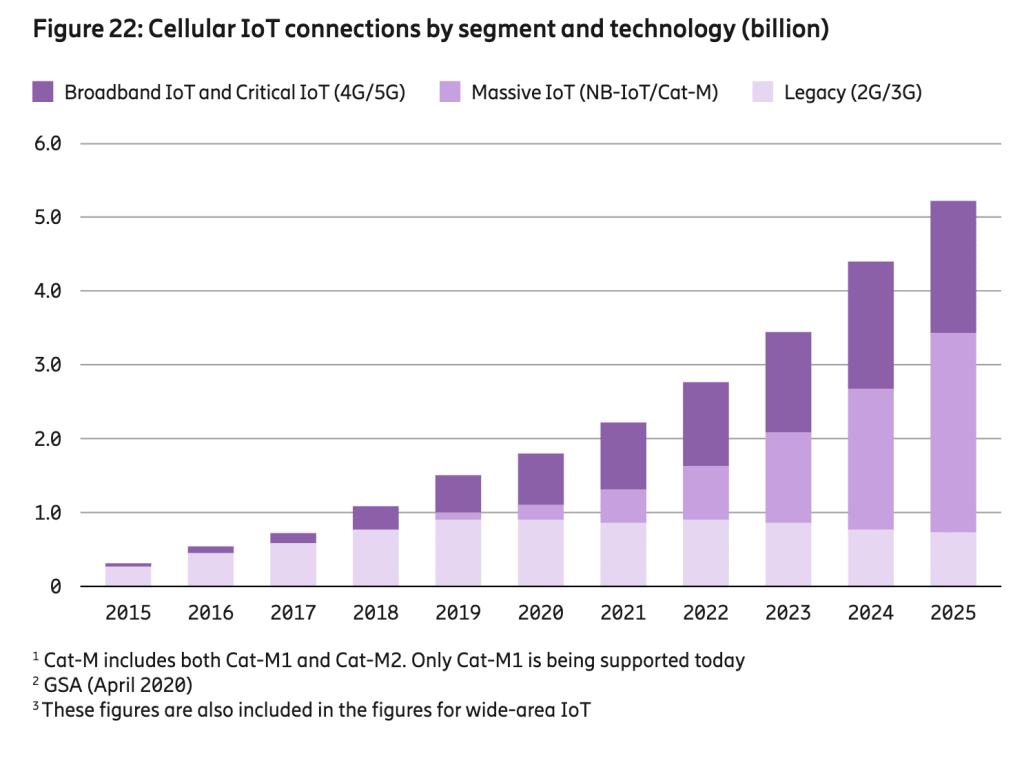
Many believe NB-IoT already is failing to get traction, even as adoption hopes remain high. .
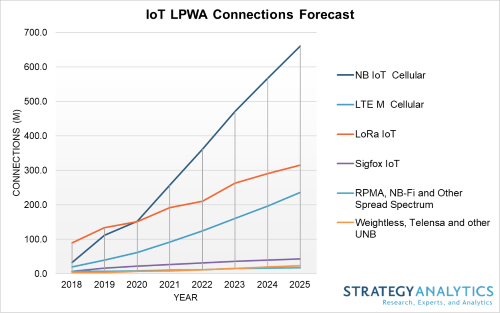
Decisions will also be spurred if connectivity revenues are smallish. Most observers expect the great majority of IoT connections will use local access connections of various types, and will not be using a wide area network service such as the mobile network or a low-power wide area network.
So the issue remains: how big a market will WAN service connections represent? And, if the market is significant, how significant will it be, compared to other opportunities service providers may have?

At the moment service providers might be earning monthly revenues between $0.50 and $1.00 a month. But some believe IoT per-connection prices could fall to as little as $1 per year. How many service providers could make a business case for such a service?
Sunday, March 6, 2022
Verizon touts Metaverse and IoT Requiring Edge Computing as a Fundamental Capability
In what it describes as a “first of a kind” partnership, Verizon says it will work with Meta to optimize network performance for extended reality cloud rendering and low-latency streaming supporting the metaverse. At this point, that appears to lean heavily on use of edge computing.

"Edge" arguably is part of the "distributed" functioning of the network platform. And both metaverse and IoT use cases often require latency performance and localized computing that mutl-access edge computing provides.
At Verizon’s recent investor day, Verizon summarized its strategy as building on networks, delivering services on demand, with two specific applications mentioned: metaverse and internet of things.
We might note the two big emphases when Verizon talks about "network as a service:" “how the network will work” (personalized, distributed, virtualized) and where Verizon sees growth (metaverse, IoT).
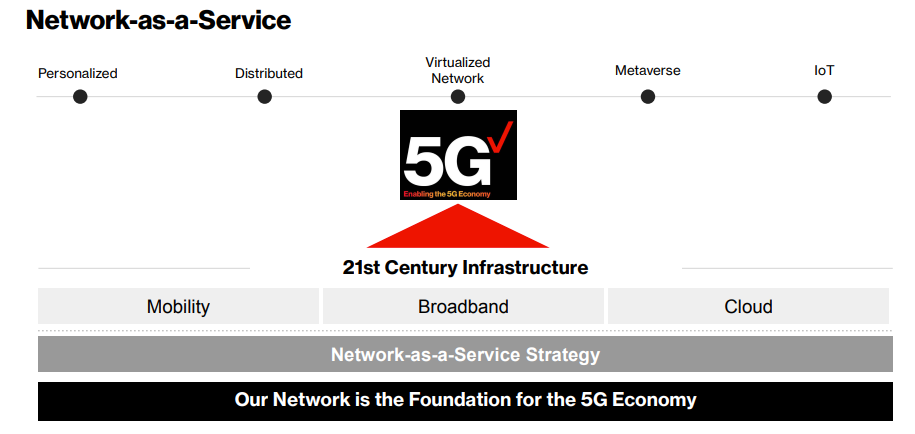
As a company, Verizon says it will drive revenue growth five ways. In terms of connectivity platforms, 5G and the use of fixed wireless will create a nationwide home broadband capability for the first time. Up to this point Verizon’s home broadband network has passed only about 20 percent of U.S. homes.
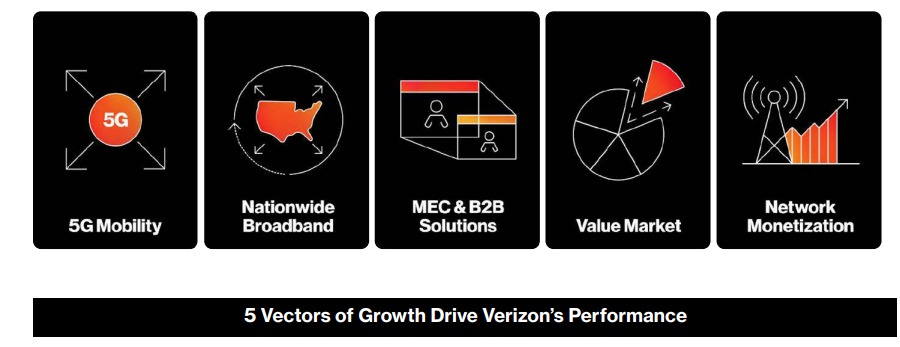
Multi-access edge computing are new solutions Verizon sees as key for growth, driven by IoT and most likely also metaverse suppliers.
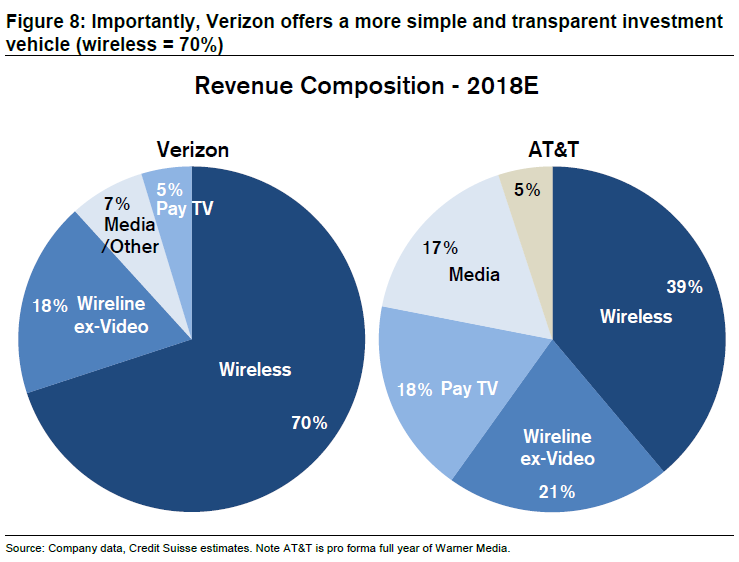
That Verizon’s revenue growth is seen as “mobile first” is not surprising. Verizon has in recent years been getting as much as 70 percent of its revenue from mobility services.
Saturday, March 5, 2022
Edge Computing Value Possibly Mirrors Debate over Flash and Hard Disk Drive Storage
Edge computing could shift deeply ingrained business practices if it produces enough additional value.
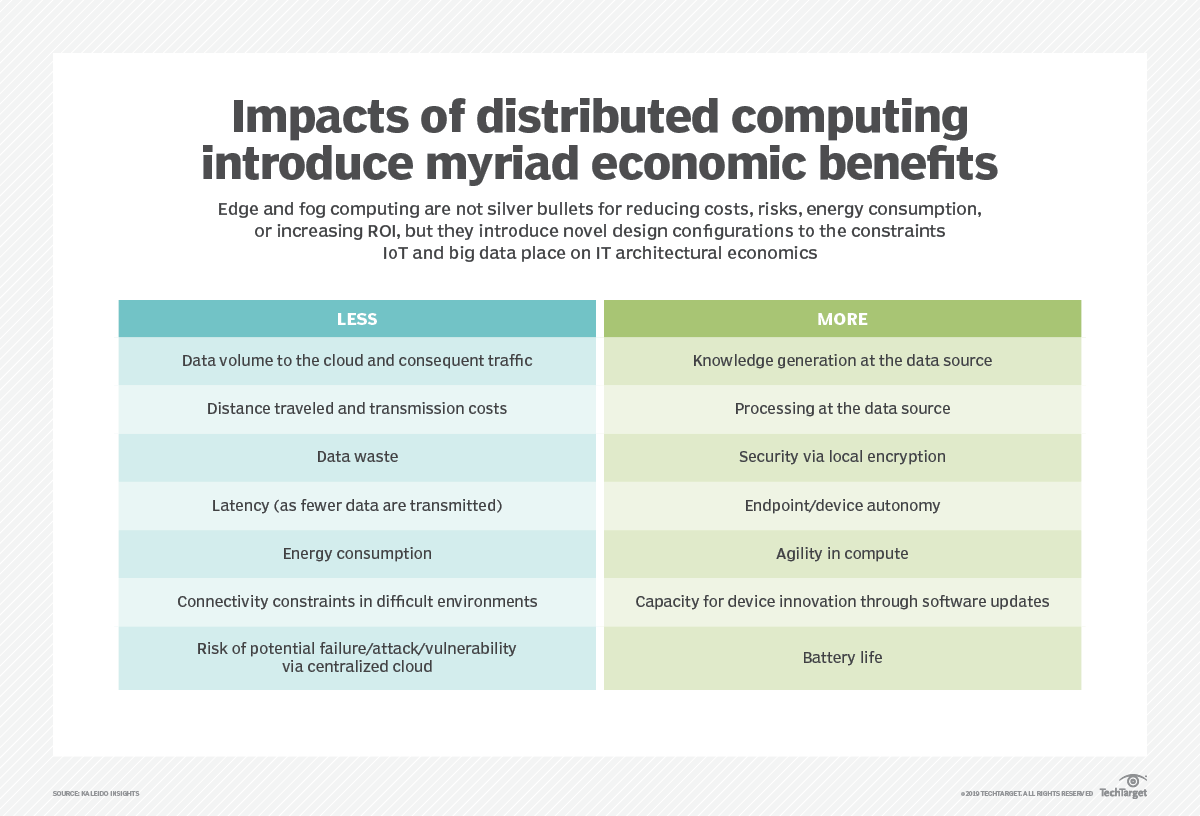
For example, take the standard practice sending personal data to the cloud, which most organizations do to extract personalized insights produced by computation-heavy machine learning.
Privacy is the issue, including data breaches and compliance with government data privacy laws.
Edge-level analysis protects privacy to a greater extent, while still extracting insight for personalization. Consumer personal data remains more secure without sacrificing behavior analysis. Personalization still happens but associated legal and reputational risks, latency and costs are reduced.
The amount of new value versus cost is part of the thinking. Edge processing might be preferred for some apps and business processes, even if the cost is higher than the cost of hyperscale data center processing.
One always can get into a debate about the value versus the cost. The cost of processing at the edge is almost certainly going to be higher than doing so at a hyperscale data center, on a per-byte basis.
But the total cost--including bandwidth cost--can produce different outcomes, as analyst David Floyer first argued in 2017.
In some ways, the value versus cost debate will be similar to the debate over storage media.
It is often argued that data centers will switch to flash storage, simply because--ignoring performance advantages--flash storage might be less costly than the hard disk drive alternative by about 2027.

One can often get a debate over the benefits and costs of storage using flash versus disk drives in data centers, even if 90 percent of the time, observers agree that flash higher performance and higher cost makes sense for some applications while HDD, with lower performance and lower cost, still makes sense for less critical apps.
In other words, flash might always make sense for tier 0 for apps such as financial transactions and e-commerce apps. Flash might make sense for some tier 1 business processing, data mining, and data analysis tasks as well, though not necessarily.
Most agree that HDD is fine for tier 2 for functions such as email, file and print, data archives, and backups.
But not everyone believes flash actually will become cheaper than disk drive storage, at least not for some time.
Hard disk drive technology advances will continue, some argue. The issues might include how much improvement can happen, and whether flash might continue to have a higher cost per unit of storage than HDD, and if so, for how long.
But you would be hard pressed to find even proponents of HDD arguing flash will “never” become cheaper than HDD for data center storage.
On the following chart, the orange line in this log-scale x-axis chart is the hard disk drive (HDD) $/TB street cost over time, plotted against the left-hand x-axis.
The blue line represents the street $/TB SSD cost over the same time period, and the two lines are projected to cross in 2026. The green dotted line stands for the ratio between the SSD and HDD costs, plotted against the values on the right vertical axis.
source: Blocks and Files

For edge computing generally, the issue will be additional value creation more than cost. But even cost issues might change as volume grows.
Friday, March 4, 2022
Verizon Business Private Network is Designed for Edge or Remote Computing
These days it is hard to conceptually separate edge computing from private networks and 5G from the application environments that allow those platforms to add value. AWS, for example, distinguishes between edge computing scenarios using regional, "close to the location" or "on premises" computing.
Conceptually, 5G could be infra for at least two of the scenarios, with access to a regional computing platform more likely using a terrestrial network connection.

Verizon Business announced a private network solution using either 4G or 5G on a private core network on premises, or using any private or public cloud.
The new service, designed to be turnkey, uses Celona for 5G Wi-Fi support as well. Verizon Business says the service is cloud-first in terms of architecture, uses plug-and-play infrastructure, self-organizing wireless and artificial intelligence for app intelligence.
The latest offer builds on the On Site 5G service Verizon had launched earlier. That offer, in turn, was built on a “non-standalone” private network that combines 5G Ultra Wideband small cells with the LTE (4G) packet core and radios of On Site LTE.
Wednesday, March 2, 2022
System Integrators and IT Vendors Might Gain Half of Edge Computing Revenues, Says Vertiv
As is the case for most enterprise use cases and applications, though many participants in the ecosystem will have roles and market share, system integrators and information technology suppliers might gain about half the revenue generated by edge computing, according to Vertiv.
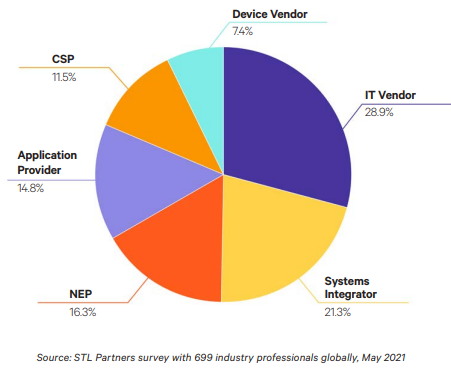
But infrastructure suppliers and application providers also will have key roles and gain market share, Vertiv estimates.
Edge computing infrastructure will not act as a substitute for cloud, says Vertiv, while noting that the number of edge sites will grow by 226 percent from 2019 to 2025.
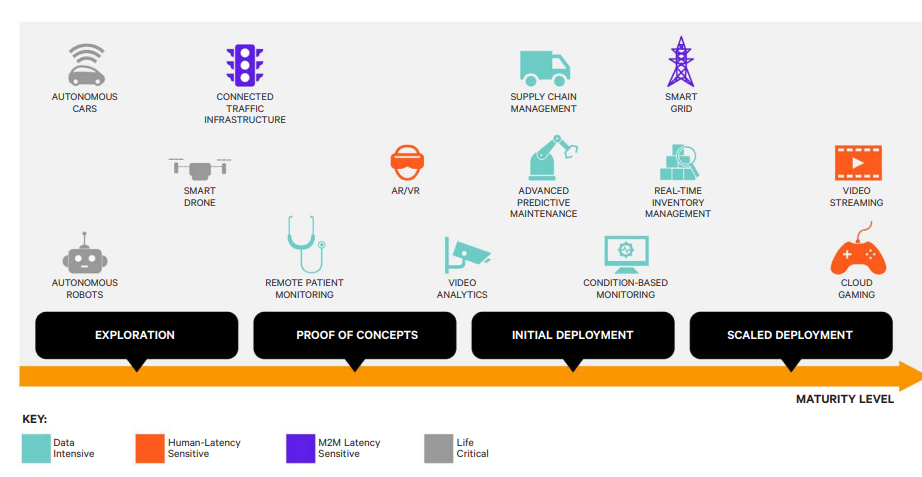
The most developed edge computing deployments will support cloud gaming, video analytics and stock trading, says Vertiv. Use cases such as autonomous cars are still mainly at an exploration or proof of concept stage.
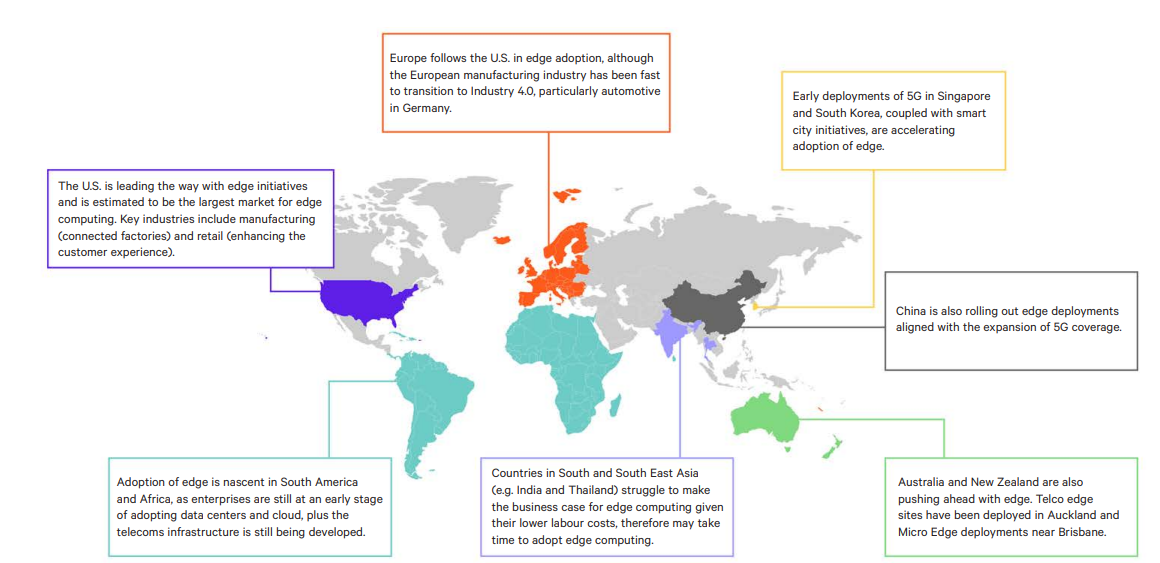
The United States is leading the way with edge initiatives and is estimated to be the largest market for edge computing, Vertiv says.
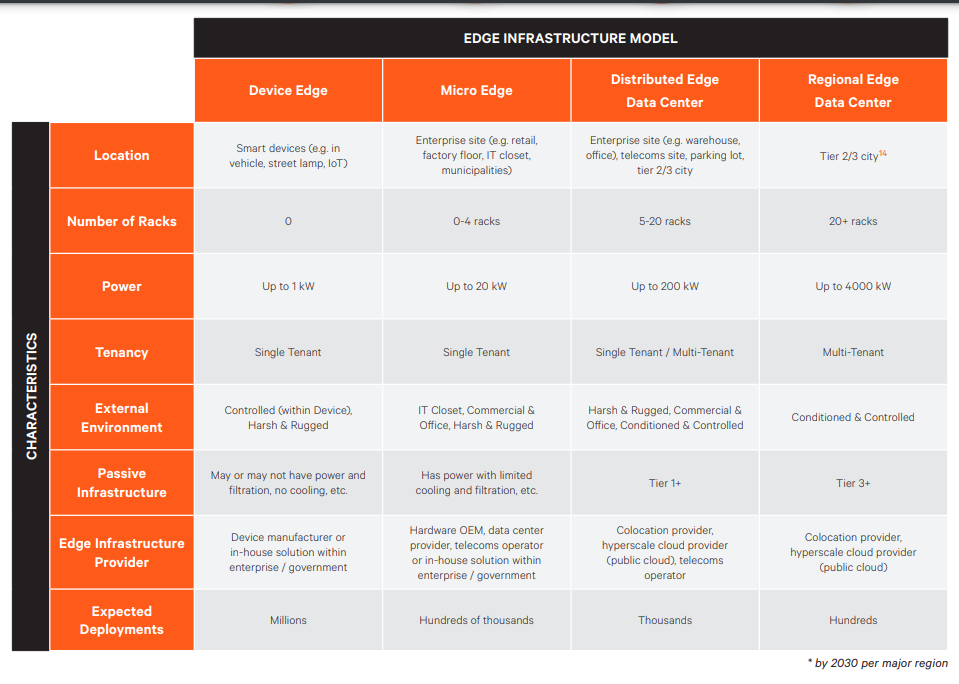
As you might expect, regional edge facilities will most often function as content repositories. “On the device” edge will be key for augmented reality, virtual reality, industrial sensing and connected health use cases.

“On the premises” edge and “close to the premises” edge will have the most value for language processing, real-time inventory and traffic management use cases, Vertiv believes.

Nokia Edge Slicing Supports both Private 5G and Public 5G
Nokia now is touting what it calls edge slicing, which builds on 5G core network network slicing, but allows enterprises to keep some critical traffic local while running the virtual networks as well, using the public network to support both types of services.
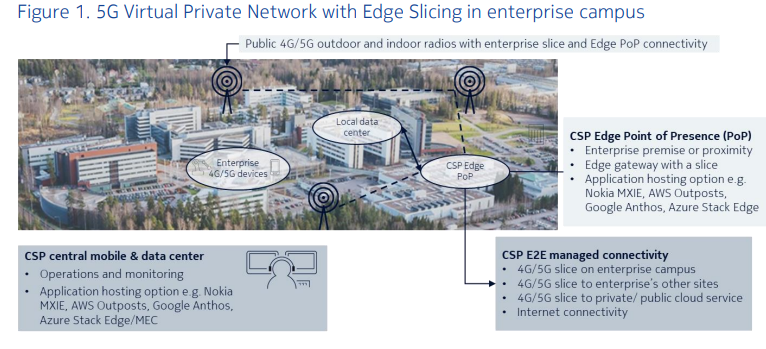
Nokia’s 5G Edge Slicing solution keeps some enterprise local data traffic separate from other virtual private network traffic.
The solution is scalable and allows the same virtualized network infrastructure to be used by several customers in the same area, for example in a business campus containing multiple companies, Nokia says.
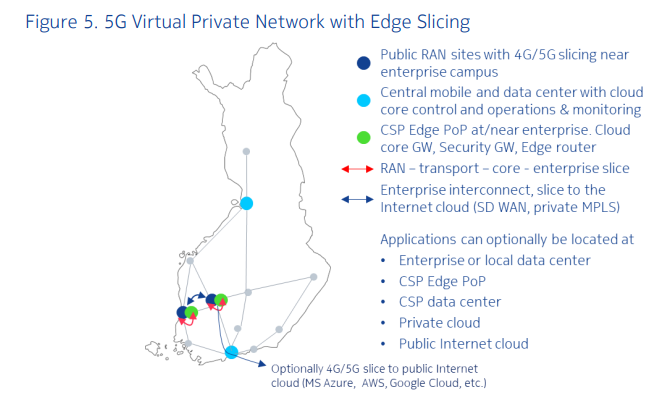
A 5G virtual private network can be deployed in an area with a 4G/5G base station or in a campus, city, or regional area.
The solution allows access providers to support both on-premise 5G private networks or 5G VPNs.
Telia and Nokia Test Edge Slicing
Basically, it is a way of confining some enterprise traffic locally, while still providing a virtual private network using network slicing features of a 5G core network.
Subscribe to:
Posts (Atom)