Friday, October 18, 2019

If You Thought BYOD was a Problem, Here Comes IoT

To the extent that employees bringing their own devices and apps into the enterprise environment have created security and other challenges for information technology teams, the coming explosion of internet of things devices will compound such challenges. 

Likewise, to the extent that exposing enterprise devices and apps to the internet creates security challenges, IoT devices might create exponentially greater risks, in part because there are so many additional devices and in part because so many will be lower-cost devices hard to secure in economical ways. 

Some 88 percent of U.S. and U.K.  information technology decision makers surveyed on behalf of Kollective believing IoT devices will make their workplaces more efficient. But with so many new internet of things devices possibly deployed, 55 percent of respondents also consider security risks to be the number one roadblock for IoT adoption in the enterprise. 

Over half (52 percent) of IT leaders surveyed on behalf of Kollective believe internet of things devices operating at the edge of their networks will be a key issue. Over a third (38 percent) see deployment challenges.

Additionally, 72 percent of respondents see IoT as a security risk to their company.  Also, based on current experience updating devices, 29 percent of respondents expect difficulty controlling and updating IoT devices at scale. 
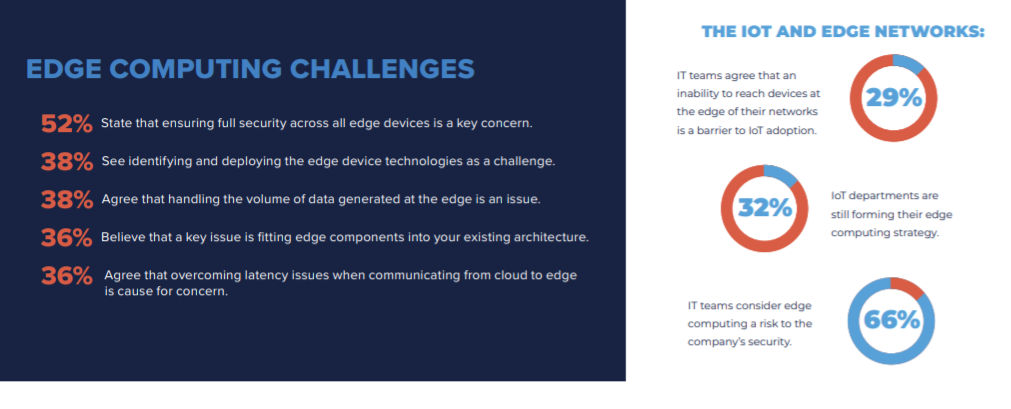

The volume of data generated at the edge also will be an issue for their firms, the respondents say. 

Thursday, October 17, 2019

Intel Acquires Cloud-Native Edge Platform

Intel is acquiring the Smart Edge intelligent-edge platform business from Pivot Technology Solutions Inc., an IT infrastructure and service provider. 

Smart Edge is a cloud-native, scalable and secure platform for multi-access edge computing (MEC), designed to allow enterprises and communications service providers to bring cloud-like services closer to the user on the customer-premise or network edge

The expansion of computing in the network and at the edge is an important growth opportunity for Intel, an estimated $65 billion silicon addressable market by 2023, Intel says. 

The Smart Edge platform is built to run on Intel technologies, such as high-performing Intel Xeon Scalable processors today and, going forward, Intel Optane memory, Intel FPGAs and other accelerators. Smart Edge’s software is also highly complementary with Intel’s OpenNESS (Open Network Edge Services Software) project, Intel says.

For enterprises and service providers, Smart Edge enables new opportunities and revenue streams while reducing the total cost of ownership for intelligent edge solutions, says Intel. 

For example, retailers could deploy new personalized and location-aware in-store experiences or factories could combine 5G, data analytics and artificial intelligence (AI) near the edge to drive greater operational efficiencies.

Wednesday, October 16, 2019

IoT Device Attacks Up 9X in 2019 First Half

Kaspersky honeypots--networks of virtual copies of various internet connected devices and applications--have detected 105 million attacks on IoT devices coming from 276,000 unique IP addresses in the first six months of the year.

This figure is around nine times more than the number found in the first half of 2018, when only around 12 million attacks were spotted originating from 69,000 IP addresses. 

“Attacks on IoT devices are usually not sophisticated, but stealth-like, as users might not even notice their devices are being exploited,” Kaspersky notes.  The Mirai malware family behind 39 percent of attacks is capable of using exploits, meaning that these botnets can slip through old, unpatched vulnerabilities to the device and control it, Kaspersky notes. 

Another technique is password brute-forcing, which is the chosen method of the second most widespread malware source, Nyadrop. Nyadrop was seen in 38.6 percent of attacks.


Countries originating the most attacks in the first half of 2019 include China, with 30 percent of all attacks, Brazil with 19 percent and Egypt with 12 percent. A year ago, in the first half of  2018, Brazil lead with 28 percent of attacks, China had 14 percent and Japan was the source of 11 percent of attacks.

Tuesday, October 15, 2019

IoT Will Drive a Significant Portion of Global Data Traffic by 2025

If total global data consumption in 2025 is about 175 zettabytes, as IDC expects,  then IoT devices in use at that time (perhaps 42 billion IoT devices, according to IDC) might represent 79 ZB, or perhaps 45 percent of total global data generation. 

Of course, others expect far fewer IoT devices in 2025, with some estimates at about 22 billion, not 42 billion. But even using a lower 22 billion IoT device estimate, such devices will significantly outnumber smartphones and other human-used connected devices. 


The point is that IoT devices will drive a significant portion of global data traffic and processing loads by 2025 or so.

Edge Computing and Platform Services Related to Edge Could be Key for Connectivity Providers

Relatively speaking, over a longer time frame, internet of things and robotics will have less business impact than cloud computing or reliance on third-party services overall, blockchain, artificial intelligence or analytics, according to consultants at EY. 

That might suggest, for connectivity providers, the potential of operating in parts of the enterprise ecosystem featuring edge computing and analytics based on the ability to harvest data and process it using IoT networks. 


Monday, October 14, 2019

Service Provider Role in Edge Computing

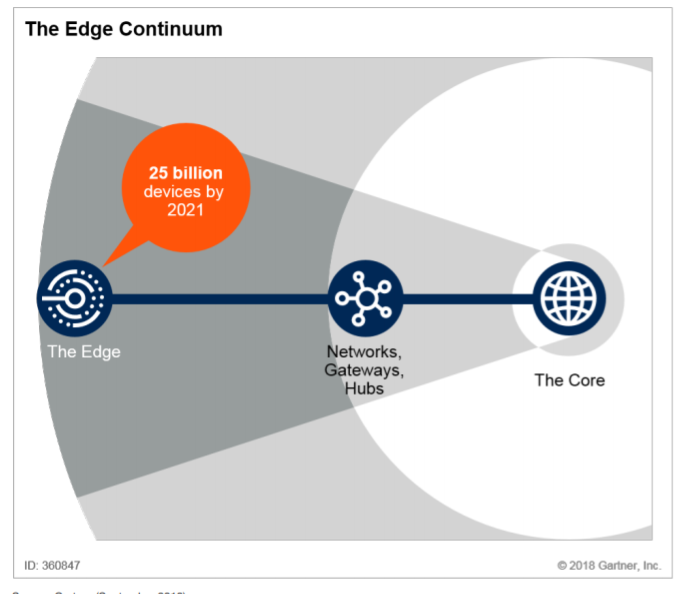
Device proliferation, ultimately representing perhaps scores of billions of new devices,  is one reason many believe edge computing will be an essential complement to remote hyperscale cloud data centers. 

Irrespective of latency requirements, which will be quite stringent for some apps such as augmented reality or virtual reality, the sheer amount of wide area network throughput required to support all those device sessions--and the hairpinning--might propel a search for more local processing.                           

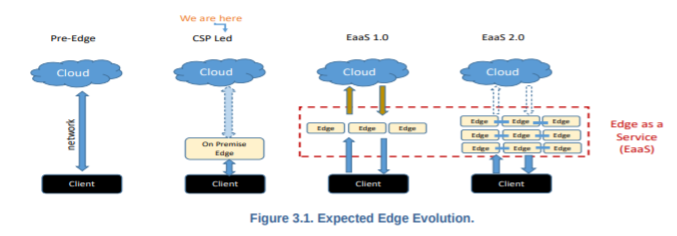
In this illustration, today’s reliance on remote hyperscale data centers is shown far left. Some amount of on-premises edge processing is shown in the progression. In further potential stages of development, edge processing might be provided by connectivity providers as a utility (service) sold to third parties. 


The network edge is where connectivity providers might create a distinctive role, as compared to on-device or on-premises forms of edge computing. 


Sunday, October 13, 2019

Low Latency is Not the Only Value of Edge Computing

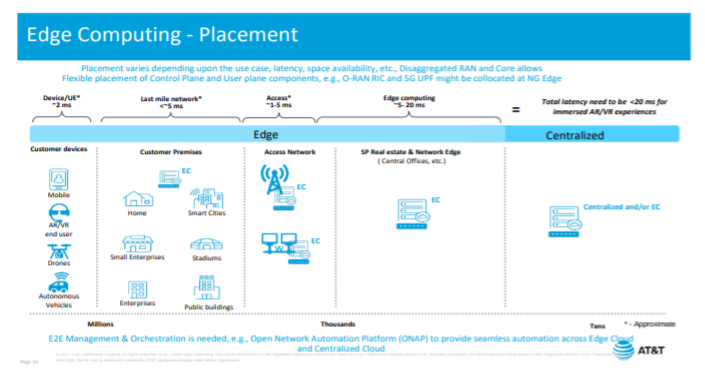
Although latency avoidance is the most widely cited reason for placing workloads at the edge, there are other potential benefits.

  • Reduced bandwidth across wide area networks
  • Need for limited autonomy or disconnected operation
  • Privacy and security
  • A requirement for local interactivity

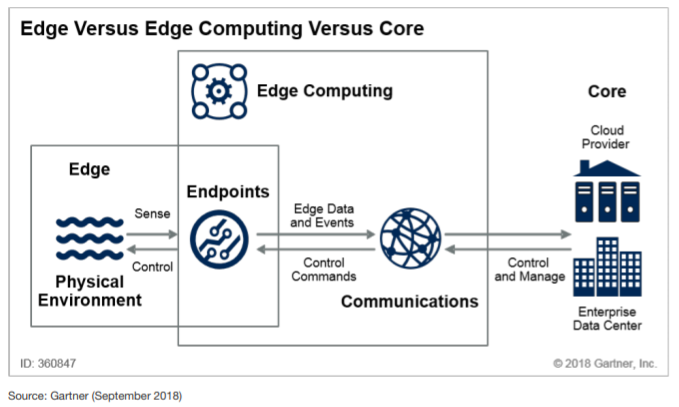
To be sure, Gartner estimates that by 2022, more than 50 percent of enterprise-generated data will be created and processed outside the data center or cloud. Edge computing places content, data and processing closer to the applications, things and users that consume and interact with them. 

That is a clue to possible value. If there are 25 billion to 30 billion internet of things sensors in operation at some point in the next decade, and if half to 75 percent of those sensors actually communicate with some external computing resource, then it is perhaps obvious that processing load across the wide area network could be substantial. 


Neither deployment at the edge, nor internet of things necessarily requires edge computing, though some apps requiring ultra-low latency might. Devices that must work even when internet or other network connectivity is intermittent provide other use cases when edge processing is useful. 

In other cases, privacy or security issues might lend themselves to local processing. Sensors might connect only to local computing devices including PCs, programmable logic controllers on an assembly lines or a self-driving and autonomous car.


Sensors can stream data to remote data centers, the same way many devices and apps now interact with hyperscale and remote data centers. But there may be advantages to pre-processing or processing at the edge.


Intel Edge Cloud for Visual Apps

Saturday, October 12, 2019

How Big a Deal Might Edge Computing Be?

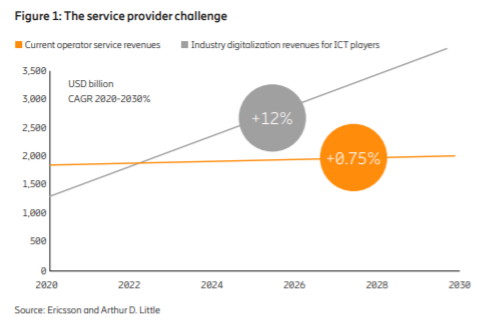
Ericsson offers a fairly simple argument for why big service providers have to consider moving into other areas of the information ecosystem, including perhaps most importantly edge computing: growth will not be found in the consumer connectivity business. 

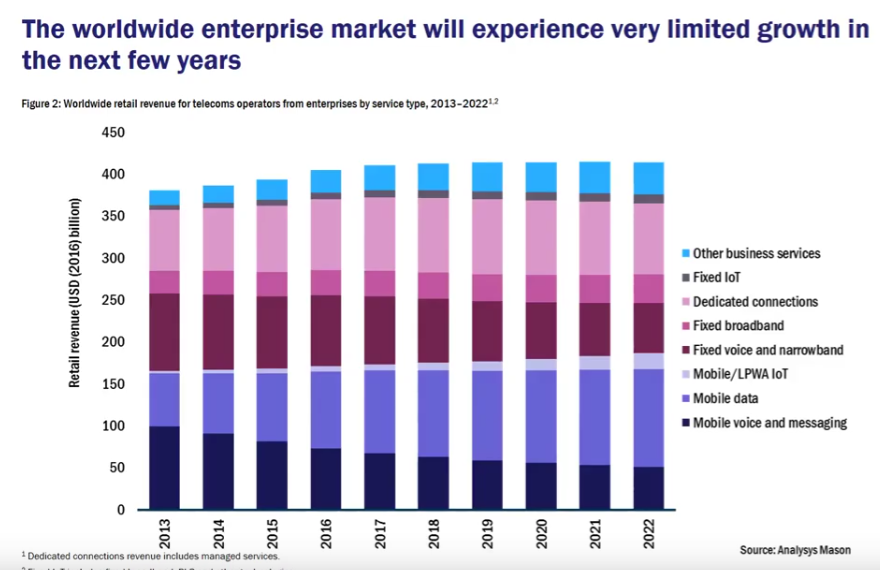
Simply put, growth rates in the consumer communications business are forecast to grow only about 0.75 percent per year to 2030, enterprise revenues are flattish, while the broader information technology business grows at a compound annual growth rate of 12 percent per year. 


Business customer revenues in many markets have been slow growing or have slipped overall  for many decades, in large part because customers are able to satisfy their needs with lower-cost, but higher performance, alternatives. 


The service enabler role shows the biggest growth opportunity for service providers and includes providing digital platforms on which businesses can configure and integrate value-enhancing digital capabilities into their processes, Ericsson argues. 

That is a huge challenge, but offers high rewards, if connectivity  providers can create service platforms, system integration and content management roles. 

Service enablement also logically includes becoming a supplier of edge computing facilities, managing devices, software and data. It is likely easiest to see how that works in terms of service providers becoming suppliers of edge computing infrastructure or internet of things infrastructure that incorporates edge computing. 


Thursday, October 10, 2019

Can Connectivity Providers Succeed as Edge Computing Suppliers?

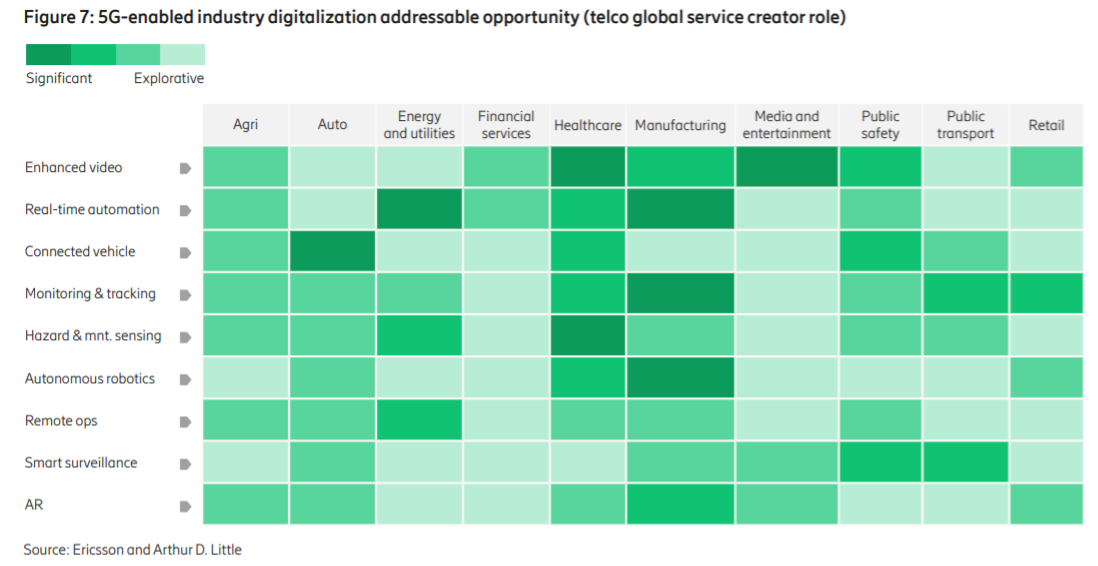
One of the practical issues with internet of things, as developed for enterprise customers, is that each specific industry vertical has unique apps, value chains and requirements that are hard for a “horizontal” connectivity provider to supply easily. But if 5G connectivity suppliers are going to be anything more than the network access supplier, some moves across the ecosystem, in one or more verticals, might be necessary.

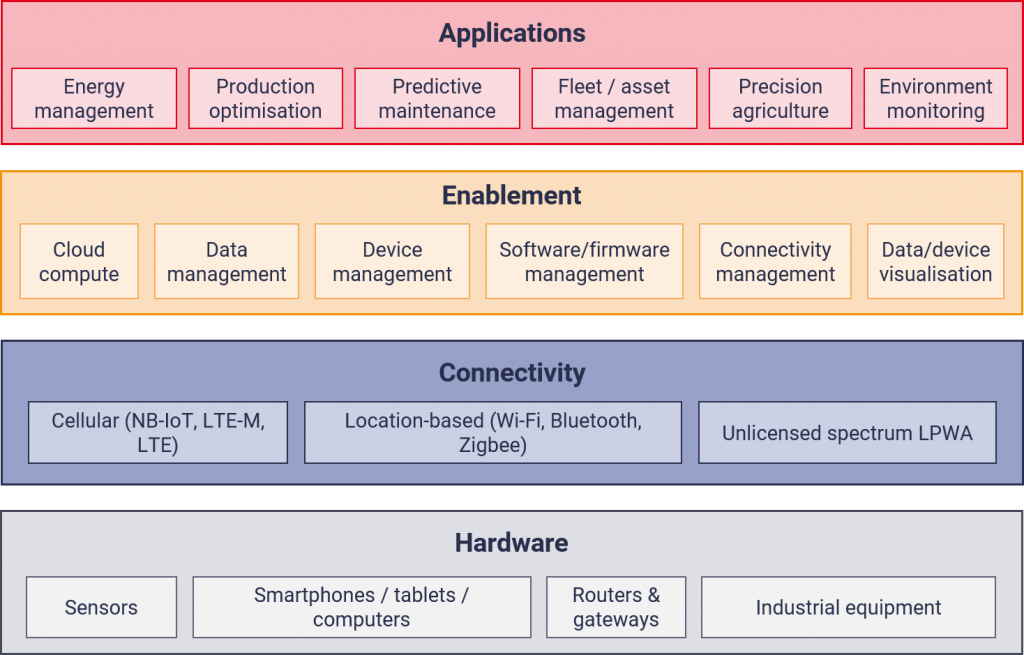
To illustrate, each IoT platform, in each industry, requires hardware, connectivity, service enablement of many types and then the actual applications used in each industry. To the extent that it is “easier” to move into ecosystem adjacencies, rather than further across any ecosystem, the logical areas for connectivity providers might be either devices or enablement. 

Thinking back many decades, the analogy is connectivity suppliers trying to diversify, in the competitive era, into devices or computing infrastructure. It has proven quite difficult to do so. Most service provider forays into the role of data center operation have produced mixed results. Only a few service providers have tried to create devices. In the pre-Internet era, one might note France Telecom’s MInitel, for example. 


In the early 5G era, many are looking at edge computing facilities as a possible way to expand into the enablement role. A few connectivity providers believe they have the resources to emerge as app providers in connected car apps, for example. 

In the consumer space, many connectivity providers have tried to become home security providers, perhaps with moderate success. In many areas of Africa, mobile operators have emerged successfully as suppliers of banking and payment apps. 

Still, the point is that, longer term, movement into other key areas of the IoT value chain will be looked at, primarily because the financial return from IoT connectivity, while important, appears relatively limited, as dumb pipe connectivity products tend to feature. 


Wednesday, October 2, 2019

Schneider Electric Unveils 6U Wall-Mount Micro Data Center

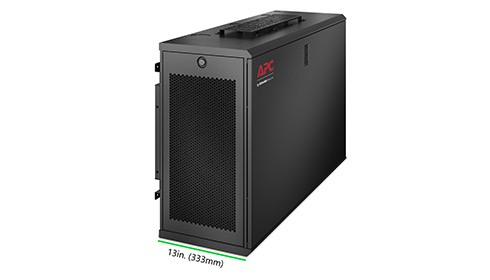
Schneider Electric has announced availability of micro data center in a 6U chassis, intended for wall mounting where space is at a premium. 

Schneider Electric's 6U wall mount is designed for edge computing where zero floor space is available. The latest addition too the EcoStruxure Micro Data Center product line is 60 percent less intrusive than traditional wall mount enclosures. 

Shock packaging means partners and integrators can pre-install IT for quick and standardized rollouts, and its integrated dust filter and fan ventilation make it ideal for light industrial environments, the firm says.  The 6U Wall Mount allows customers to support critical business operations in non-IT environments.

Tuesday, October 1, 2019

What is Edge Computing?


Rob High, IBM Fellow and CTO, provides insights into the basic concepts and key use cases of edge computing.


Why "Fog" Terminology Exists

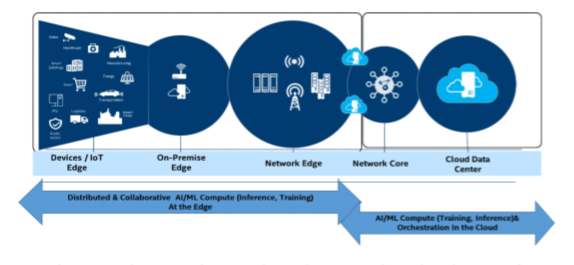
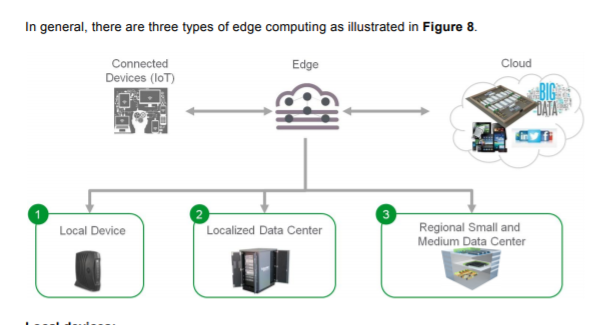
The reason some people talk about fog computing is that “edge” computing encompasses a range of potential locations. 

In some cases, the local computing happens on a device, especially in home or small office use cases. Running the security system for the building or storing local video content on a DVR are examples. 

In other cases, computing happens locally on the premises, but not on single devices, and might feature a single rack of servers, up to perhaps 10 racks. In other cases, computing will happen at a metro area data center.