Thursday, April 18, 2019

Use Cases for Network Slicing Often Also are Amenable to Edge Computing

Network slicing might be one of those times you will see a feature described as a market. That is not to deny that network slicing functionality is an attribute of virtualized core networks, and that the hardware and software to support network functions virtualization is not a “market.”

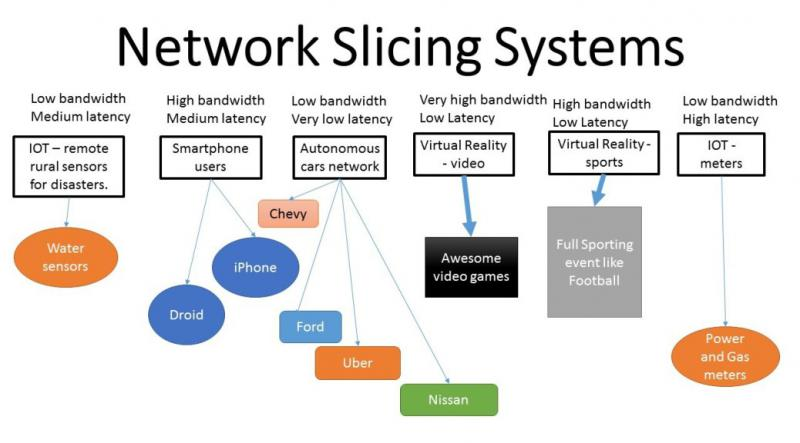
But it likely is more accurate to say that markets for core network platform elements include network slicing as an objective and function. That noted, service providers already are thinking about products they can create and monetize that take advantage of network slicing, mostly centering on use cases with specialized requirements (bandwidth and latency, primarily) distinct from networks optimized for smartphone users.  

High bandwidth, low latency use cases such as virtual reality and augmented reality, at sporting events or for gaming, provide some examples. In other instances, bandwidth demands can vary, but very low latency is a must. Autonomous car support provides the commonly-cited example.

In other cases it is the ability of the network to poll devices in a battery-efficient way is key. Sensor apps in remote locations provide the best example of that use case.

In many ways, edge computing provides a substitute platform for low-latency or high-bandwidth apps, as well. Processing at the edge helps solve the latency issue, while local processing also avoids the need to transfer lots of data across the core network.

Monday, April 15, 2019

Data Center Spending Grew 17% in 2018

Global spending on data center hardware and software grew by 17 percent in 2018, according to Synergy Research Group.

Spending on public cloud infrastructure grew by 30 percent, while spending on enterprise data center infrastructure grew by 13 percent, the latter driven by 23 percent growth in private cloud or cloud-enabled infrastructure, Synergy researchers say.

ODMs in aggregate account for the largest portion of the public cloud market, with Dell EMC being the leading individual vendor, followed by Cisco, HPE and Huawei.

The 2018 market leader in private cloud was Dell EMC, followed by Microsoft, HPE and Cisco. The same four vendors led in the non-cloud data center market, though with a different ranking.

DCI CIE Q418

Total data center infrastructure equipment revenues, including both cloud and non-cloud, hardware and software, were $150 billion in 2018, with public cloud infrastructure accounting for well over a third of the total.

Private cloud or cloud-enabled infrastructure accounted for a little over a third of the total. Servers, OS, storage, networking and virtualization software combined accounted for 96 percent of the data center infrastructure market, with the balance comprising network security and management software, says Synergy.

“Cloud service revenues continue to grow by almost 50 percent per year, enterprise SaaS revenues are growing by 30 percent, search/social networking revenues are growing by almost 25 percent, and e-commerce revenues are growing by over 30 percent, all of which are helping to drive big increases in spending on public cloud infrastructure,” said John Dinsdale, Synergy chief analyst.

Thursday, April 11, 2019

How Might a Tier-One Telco Gain Edge Computing Scale?

Given past experience, it is possible to doubt the success cloud efforts by telcos will achieve, despite some cloud asset advantages. To be sure, edge computing again brings hope. Still, the value of connectivity was negligible for telco involvement in cloud computing, and even ownership of edge assets (real estate and connections) might not bring success for infrastructure edge, either.


But history also teaches something else that is vital to understanding how tier-one telcos actually grow revenues: they acquire capabilities and revenue sources by acquisition. That will eventually play out for infrastructure edge computing as well. As Comcast and AT&T bought their  way into the content ownership game, as all the four U.S. tier-one mobile providers acquired their way to scale in mobile services, as the former SBC became AT&T, acquisition was the way scale was built.


If past is prologue, and I believe it will be, then eventually, any U.S. tier-one connectivity provider that expects to generate revenue at scale in infrastructure edge computing will have to do it by acquisition, or possibly through some sort of major joint venture, if in fact no targets with scale can be found.


And though it is hard to see why the larger cloud kings (AWS, Microsoft, Google, IBM) would want to tie themselves exclusively to a single connectivity provider, in principle a major edge computing joint venture, where the actual cloud operations are run by the partner, and the connectivity provider supplies the local real estate and access, would allow the scale necessary in what is sure to be a fragmented business.


We can almost certainly be safe in predicting that no tier-one telco will acquire all of AWS, Google, Microsoft, IBM, simply because the capital is not available, and because any such move, even if feasible financially, would face lock in issues.

That might be the case even if full multi-cloud capability was ensured from the start.


What also has to be addressed is whether a retail or neutral host model makes more sense. In the former case, the telco sells services direct to end users; in the latter model the telco supplies the neutral-host facilities and connections to cloud kings. Telcos might prefer the former, but the economics, early on, might favor the latter approach.

AT&T Touts Its Edge Computing Role

Qualcomm Vision-Based Edge Computing Ecosystem Grows

Qualcomm Technologies has announced “broad ecosystem support” for the Qualcomm Vision Intelligence Platforms supporting edge computing centered on on-device camera processing and machine learning.

Qualcomm Vision Intelligence 400 and 300 platforms use purpose-built QCS605 and QCS603 systems on a chip  that include an integrated advanced image signal processor, the Qualcomm Artificial Intelligence (AI) Engine and a “heterogeneous compute architecture,” including ARM-based multicore Qualcomm Kryo CPU, Qualcomm Hexagon DSP with a vector accelerator and Qualcomm Adreno GPU, Qualcomm says.

Those chipsets are ideal for running machine learning and other edge compute use cases that require video processing and analytics support, with real-time stitching for simultaneous multi-video streams while running concurrent applications, Qualcomm says.

Android and Linux-based software platforms and advanced camera software development kits (SDKs) are supported.

Partners include Altek, AnyVision, Cisco Meraki, Hitron Systems, Intellivix, Intrinsyc Technologies, Linkflow, LITE-ON, Microsoft, Motorola Solutions, Owlcam, PathPartner Technology, Pilot AI, Poly, Qisda Presice Optics, Ricoh, Security and Safety Things, Thundercomm and VIVOTEK.

Tuesday, April 9, 2019

IoT Markets Really Cannot be Quantified Right Now

Some markets are more complicated than others. Internet of things, which might not even be a single market, is really complicated.


Also, we sometimes see forecasts for functions that are part of markets. Consider network slicing, which some now see as a discrete market. But network slicing can be seen as a function produced by a virtualized network, which itself is function of core networks. So is the market network slicing, virtualization or capital and other spending on next-generation networks?


The decisions matter since overcounting is the danger (counting a unit of revenue multiple times, for example).


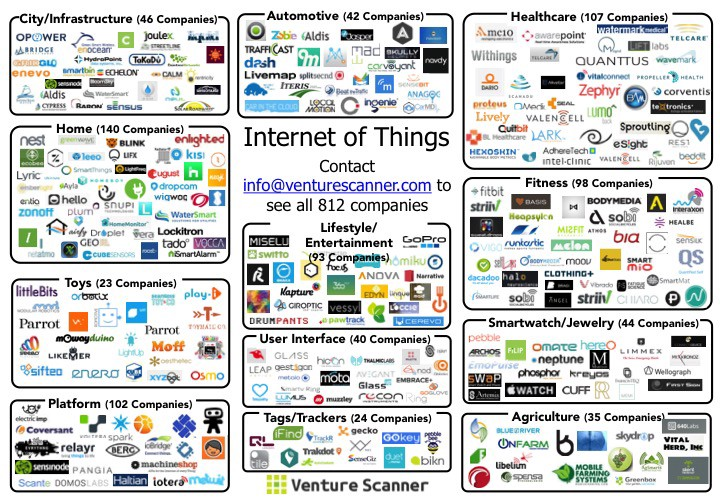
Consider this visualization of consumer wearable, smart city, precision agriculture, smart home, healthcare, automotive, logistics and a few platform segments as well.


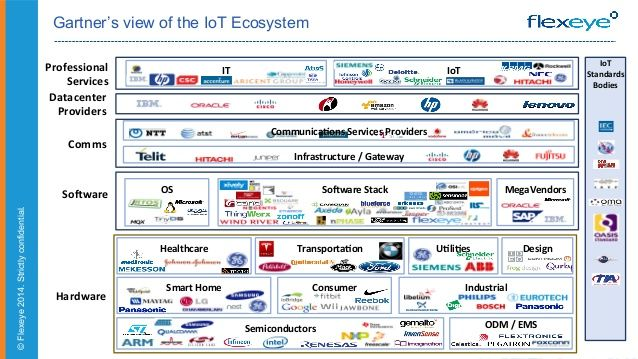
Other more horizontal approaches are superficially less complex, but only superficially.


Consider the automotive IoT marketplace, which is robustly complex, as are other vertical markets, featuring perhaps hundreds of direct participants.


So imagine the plight of any business professional trying to make sense of the opportunities. Revenue forecasts given the participation by thousands of potential companies, quickly can be ridiculously--and most likely falsely--large. For the IoT market is not the simple sum total of revenue earned by all firms who claim to be in the business.


IoT revenue is the incremental amount of new activity that does not displace existing spending on underlying functions (hardware, software, consulting, integration and so forth).


So could IoT generate revenue  as large as $3 trillion by 2025? Here are a few assumptions made by Machina Research in creating the forecast. The researchers assume about $1.3 trillion in direct spending on hardware, software and services, with the balance of revenue located upstream or downstream in the ecosystem.


Chipsets would be downstream, while the rest of the revenue is earned in other ways. That notion seems to be built around the idea of economic impact. Perhaps, as McKinsey analysts argue, there is the attributable value of cloud computing more generally, advanced robotics and so forth.


That is not to say broad economic impact is an invalid concept. But economic impact studies normally rely on multiplier effects to generate a sense of ecosystem benefits. That is something quite different, and quite a bit bigger, than direct sales of products and services in any single industry. And that is where most of the big numbers related to IoT forecasts are found.


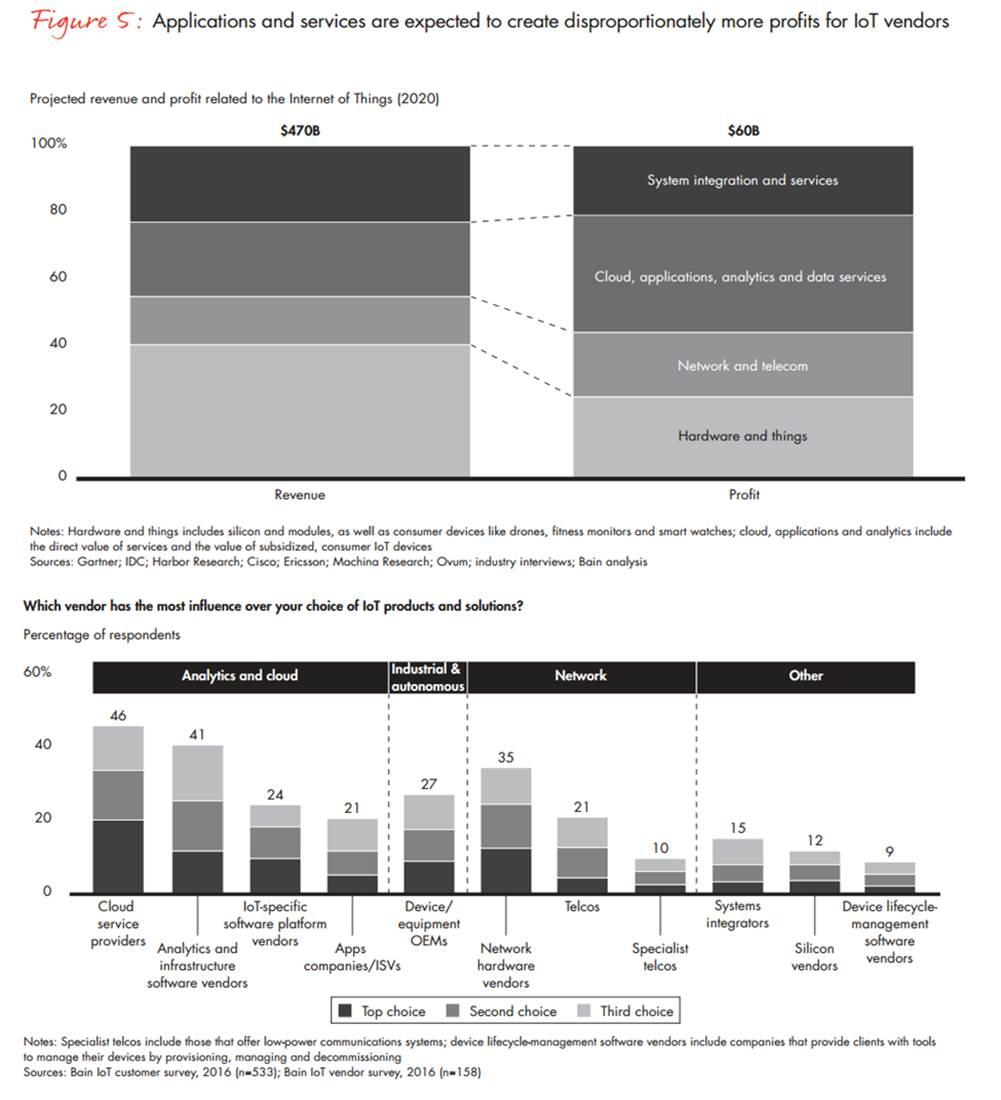
The other issue is that, by many accounts, as much as 40 percent of total IoT spending could be for devices and “things” (including smart watches, often smart TVs and other appliances, connected cars and so forth). So right off, some of us would tend to discount the value of the connected appliances, and perhaps only include the value of sensors, for example.


That is not to say a smartwatch or connected security system or vehicle is not, in some way, part of the IoT ecosystem; only to note that for analytical purposes such purchases also are normally counted as part of some other value chain.


IoT markets are nearly impossible to quantify with any precision because there simply are too many moving parts right now.

Wednesday, April 3, 2019

Edge Service Revenues Depends on Where the "Edge" Is

Where is the edge? All over the place, one might say, based on the perceptions of various participants in the content and data ecosystem.

"Web scale players think the edge means regional colocation data centers, hundreds or even thousands of kilometers away from the user,” says Joe Madden, Mobile Experts principal analyst.

Mobile operators see the edge as a location between 2 km and 100 km away from any end user.

REITs and micro data center supporters see the Edge close to the radio towers, less than 5 km from most users. Enterprises think that the edge needs to be in-building or at the client device.

All those definitions might have relevance for different edge use cases.
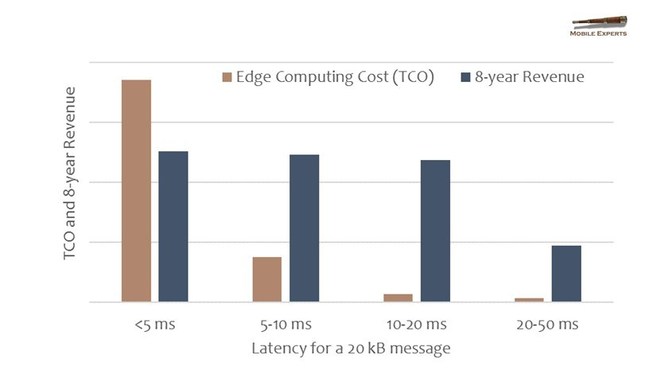
Mobile Experts

Much hinges on the business model and the use case. Advertising apps might well be just fine with a regional approach, as latency is not much of an issue for many advertising requirements. Infrastructure edge will make sense for latency sensitive apps outside of main enterprise locations.

Large enterprises often will be able to use on-the-premises edge computing. Right now, it is impossible to quantify the size of revenue opportunities for edge computing “as a service” providers. Lots of servers will be installed, of course. Lots of electrical power will be used. New structures, with racks, air conditioning and electrical supply, will be needed.

So the picks and shovels will be busy. Revenue for edge computing services will take a longer time to build.

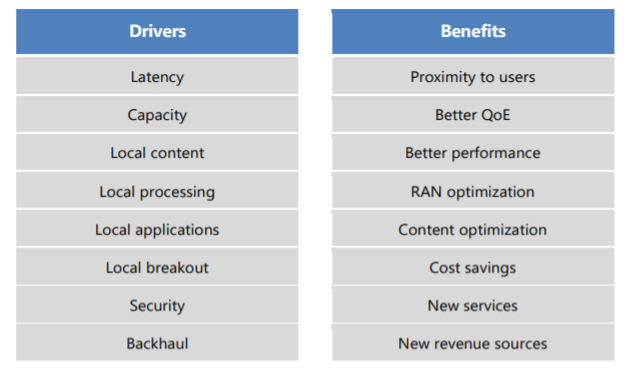
Edge Computing Benefits Start with Latency, Do Not End There

Even if ultra-low latency is the distinctive value offered by edge computing, it is not the only key driver. In fact, the history of value provided by content delivery networks might be the best way to understand where value lies.

The traditional reason content delivery networks became valuable is that it avoids huge amounts of data transfer across the wide area network. In the past the argument was that local caching of video prevented a whole lot of video unicasting across the WAN.

It is a prosaic but nevertheless genuine value to note that as more entertainment video consumption switches from linear broadcast (multicast) to on-demand (unicast), and image formats become more dense (4K, 8K), there is simply more image data to push. That has practical, everyday implications whenever users push a remote or click a button to pull up a new stream. In those use cases, local caching improves experience by reducing the lag time to display full-motion video in a new screen or on a new channel.

In addition to latency value, edge processing can have a meaningful impact on WAN traffic load, and therefore WAN transport cost.


Edge computing becomes more valuable precisely when WAN network load is high. High traffic loads generate radio network congestion, and that in turn increases latency.

Latency reduction is important for other apps and use cases as well. For gaming apps, a human requires 13 milliseconds or more to detect an event. A motor response might add 100 ms. But then consider artificial reality or augmented reality use cases.

To be nearly indistinguishable from reality, one expert says a VR system should ideally have a delay of seven milliseconds to 15 ms ms between the time a player moves their head and the time the player sees a new, corrected view of the scene.

The Oculus Rift can achieve latency of about 30 ms or 40 ms under perfectly optimized conditions, according to Palmer Luckey.

There also are other latency issues, such as display latency. A mobile phone, for example, might add 40 ms to 50 ms to render content on the screen.

The point is that end-to-end latency is an issue for VR apps, and edge computing helps address a potentially-important part of that latency.  

Tuesday, April 2, 2019

Edge Computing has Some Disadvantages

Every technology, platform and approach has some negatives or potential trade offs. So does edge computing. Redundancy is one of those features we have not yet figured out.

source: W Media

5G and Infrastructure Edge Opportunities Vary by Use Case, Industry

It remains unclear how various internet of things markets will develop, as opportunities for 5G connectivity providers or edge computing suppliers. The issue is that there are good alternatives to network-based edge computing and 5G access.

Many use cases can rely on premises-based enterprise-owned computing and local area network connectivity. Broadly speaking, larger sites are better candidates for private enterprise edge computing; smaller sites are better candidates for third party infrastructure edge computing.

Broadly speaking, outdoor and mobile use cases are suitable for 5G-based connectivity or infrastructure edge computing. Indoor, larger sites might well be able to use private local communications (private 4G or 5G, Wi-Fi, other local wireless platforms).

Backhaul might often use fixed networks rather than mobile 5G.


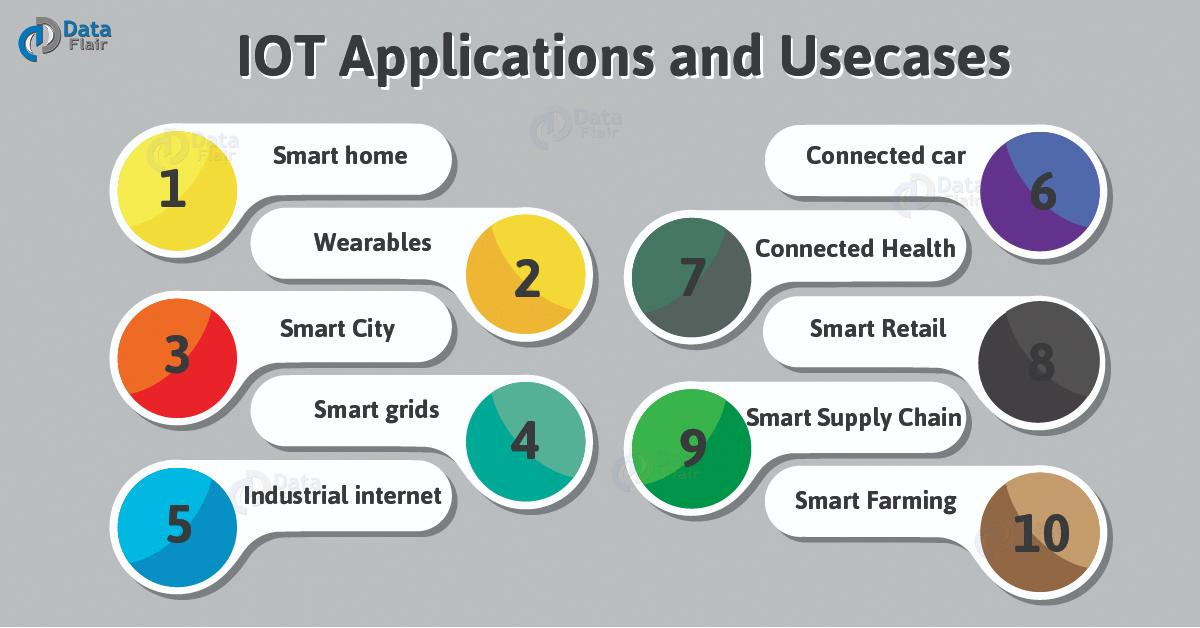
Smart home often will use Wi-Fi for local connectivity and fixed networks for local access (backhaul), as the lead use cases include home security and connected appliances, including consumer devices such as smartwatches and smartphones while in home.

Wearables (smartwatches and health monitors), on the other hand, might routinely rely on local wireless distribution (Bluetooth and others) or Wi-Fi while in-home, but 5G routinely when out and about.

Many connected health use cases are similar to the wearables market. The consumer use cases might rely on Bluetooth local communications, then Wi-Fi and some form of fixed wide area communications, or mobile connectivity exclusively for more life-critical use cases.

Smart cities are among the use cases best suited to 5G connectivity, as many of the use cases will be outdoors and widely scattered and not conveniently located for Wi-Fi access and local power. Such use cases are traffic cameras, traffic monitors, parking apps, pollution sensors, water meters and trash monitors.

Almost by definition, city-sized areas are amenable to edge computing, including both infrastructure edge and premises edge formats.

Smart grids for electrical and energy systems might be suited to low power wide area communication networks, as sensor data tends to use little bandwidth. But as prices for either 4G or 5G IoT platforms fall, mobile connectivity might emerge as an alternative.

Most consumer (at home) use cases will not have requirements for low-latency reporting. Low-latency reporting arguably will be more important for the core parts of the utility grid.

Industrial internet is among the areas best positioned for enterprise premises edge computing and private 4G or 5G networks, with WAN connectivity using fixed networks. Smaller entities and locations will be better candidates for infrastructure edge computing, as those locations might not be able to support on-premises computing.

Local communications might also rely on 5G managed access, both for local communications (quality of service reasons) and local access to the infrastructure edge computing centers.

Connected car is, without any question, the one area where infrastructure edge computing and 5G access make the most sense. By definition, vehicles are outdoors and mobile, the best use case for mobile communications. The need for ultra-low latency computing also is strong, and therefore the case for edge computing.

Smart retail is well suited to use of Wi-Fi and wired local communications, as well as premises computing for most use cases (inventory, checkout). Few of the use cases are especially latency dependent. Private 4G or 5G might also work for larger retail locations.

Smart farming, because it, by definition, happens in rural areas, is another area where 5G networks have natural appeal, but infrastructure edge computing probably does does not make as much sense. Enterprise edge (on-premises computing), because of the costs of backhaul, also might make sense in a precision agriculture context.

The general point is that the value and suitability of various edge computing modes and access platforms will vary by use case and industry setting. Connected car is the best example of a “good for 5G” and infrastructure edge computing argument. Smart retail and industrial IoT are areas where the case for infrastructure edge and 5G are less compelling, as other alternatives exist.

The big picture issue is that markets for 5G-based internet of things and 5G-based infrastructure edge computing vary by industry vertical or use case. There is no “one size fits all.”
The Fourth Industrial Revolution and the Edge


As 5G sometimes implies many different things--a mobile platform; edge computing; internet of things apps; apps powered by artificial intelligence; new forms of local area and access networks--so all those changes sometimes are building blocks for the "Fourth Industrial Revolution." 


It is a big idea; so big it encompasses every major technological change you can think of. For that reason it also is nearly impossible to model in detail. But communications and computing will be involved in major ways. 5G is among the communications developments that matter; edge computing and AI are among the computing changes that matter. 

CBRS Enables Enterprise Edge Computing

Opinions are all over the place where it comes to where incremental revenue will accrue as edge computing “becomes a thing.” Obviously, server suppliers see themselves as winners. Some suppliers of modular (cargo container sized facilities) edge data buildings see upside.

Some enterprises, in some industries, see themselves gaining the ability to create new types of local area networks that better support huge sensor networks, possibly at less cost than would have been required previously.

Cloud computing suppliers see a way to extend their computing infrastructure into a new and growing area of demand that might eventually represent 75 percent of enterprise computing.  

Mobile and fixed network service providers see a way to boost revenues from edge computing services of their own, added to the potential upside from mobile or fixed connectivity services.

So some caution is wise where it comes to predictions of “big new markets” being created. It is not clear where incremental revenues will be reaped, nor is it clear what the magnitude of those increases will be. Also unclear is the incidence of those changes (who gets the revenue?).

Among the bigger questions is where the where the edge computing takes place. Edge computing can take place on the device itself (connected car or PC), on an enterprise campus or facility (akin to traditional on-premises server and mainframe computing), at a remote local location (base of a cell tower) or some other local aggregation point (central office).

Though server revenue might not differ much based on what “edge” setting is preferred, the fortunes of many other participants in the ecosystem will vary widely, depending on where the edge computing happens.

And other developments are driving the decision matrix. Consider enterprise edge computing.

Citizens Broadband Radio Service is a platform-agnostic band of 150 MHz of wireless spectrum at 3.5 GHz frequency. Though there will undoubtedly be both fixed warrier, outdoor applications, many believe a new category of indoor wireless networks also will be enabled, allowing the creation of private enterprise networks.

These new forms of local area networks are expected to use either 4G or 5G platforms to support premises connectivity for internet of things sensor networks, obviously also having the ability to support indoors mobile phone and device coverage.

Why not use Wi-Fi or other short-range communications networks? Some argue that operating cost is relatively high. In addition, Wi-Fi is less secure than LTE, and provides coverage inferior to LTE inside buildings.

Whether these networks are operated and owned by the enterprise or a mobile network operator is among the open questions, at the moment. Enterprise-owned networks might reduce costs related to mobile network service, since all the local connections are private.

Also, some remote locations, such as mines and oil drilling sites, might not have a choice. Mobile network coverage might be limited or non-existent. On the other hand, satellite backhaul might well be feasible in such scenarios.