Saturday, February 15, 2020

Is Edge Computing a Substitutute for Network Slicing?

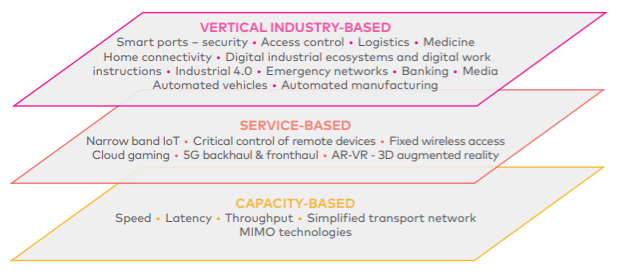
Virtual private networks are not new in the core network. But network slicing, which allows 5G mobile networks to create end-to-end virtual private networks, is new. Up to this point, best effort has been the only possible quality of service level for mobile networks. 

Network slicing creates the ability to add quality of service, end to end, for mobile devices and networks. That will allow 5G service providers to create virtual networks, operating end to end, with defined network performance or features. 

Much will depend on how other trends, such as edge computing, play out. If guaranteed throughput or specified low latency are requirements, one way of satisfying those needs is to put local computing into place. 

In many proposed use cases--factory automation, IoT sensors for agriculture or connected car apps--edge computing is an alternative to network slices that run through the mobile core network. A high-bandwidth local network with local servers then becomes an alternative to a network slice. 

To be sure, a network slice might also be set up to connect a metro edge computing asset to “in the metro” sensors, assuring a minimum level of bandwidth and latency performance. But it might often be possible to use premises computing and local area networks to provide the required levels of bandwidth or latency performance. 

About 75 percent of service provider executives surveyed by Amdocs believe the internet of things, connected cars and smart homes represent early use cases for network slicing. 

About 20 percent of respondents also believe there will be network slicing use cases in industries such as mining, agriculture and health.


There are other alternatives to network slicing as well. Enterprises long have created their own VPNs for security purposes, purchased wholesale capacity or built and run their own wide-area optical networks. 

So the issue is whether mobile operators will want to supply enterprise customers with control of their own network slices, or whether some functional substitute for enterprise control can be created instead. In other words, is there a possible role for network slicing as the enabler of a new type of wholesale service?

Often other service providers are the customers, and that could be attractive. 

In principle, a network slice could be purchased by a mobile operator as an alternative to some other capacity arrangement, possibly with the upside of quality of service guarantees to the network edge. 

Perhaps that happens in a horizontal way, as often is the case, where functions are supplied. As 3GPP defines a slice, it is “an end to end logical communication network, within a Public Land Mobile Network (PLMN) and includes the Core Network (CN) Control Plane, User Plane Network Functions and 5G Access Network (AN).”

That allows the functions necessary to create a data connection between devices and servers. 

At least in principle, a private 5G network, operated by a single enterprise, on its own facilities, would offer full vertical control of the whole network. The analogy is a complete 5G network featuring only five or six cells. 

Some might see this as a threat to the mobile operator wide area business. Some tend to think even a vertical 5G private network is an extrapolation of the local area network concept, and so not a threat to WAN services. 


Friday, February 7, 2020

Streamed Apps Would Favor Edge Computing

Local computing on devices or local servers and remote computing using communications to reach servers have in the past been partial product substitutes. That will be true for edge computing as well. In fact, for new classes of applications, edge computing will provide the same business value as content delivery networks have provided for cloud apps generally: better performance and lower wide area network charges. 


As latency performance and cost savings on bandwidth were the reason content delivery networks have had value, so edge computing will allow a reduction of north-south traffic. That might be especially true for use cases involving huge amounts of raw data to be processed and requiring artificial intelligence including real-time use cases

One development that could accentuate the tradeoffs is if apps could be streamed to devices as video and audio now are streamed. That would substitute remote servers and communications for local processing and storage on a device.

As always, the precise trade offs would depend on processing intensity and distance from the remote servers. Edge computing obviously would be helpful for processing intensive apps and use cases.

Tuesday, February 4, 2020

Cloud Infrastructure Revenue Grew 38% in 2019, Edge Impact Comes Next

AWS remains the biggest provider of cloud infrastructure services with $34.6 billion revenue. Microsoft generated  $18.1 billion, according to Canalys.

Global cloud infrastructure services spending grew 37.6 per cent to US $107.1 billion in 2019.

Google grew revenue the fastest, at 87.8 percent in 2019, albeit from a relatively low base, to $6.2 billion. 

Microsoft grew 64 percent to $18.1 billion, while Alibaba grew 64 percent as well,to $5.2 billion. AWS grew 36 percent to $34.6 billion. 

The “law of a few” or “winner take all” trend also seems to hold in the cloud infrastructure market. 

All four cloud kings  made their gains at the expense of "others", which lost collective market share of nearly five percent.


In terms of edge computing, AWS seems to be moving most aggressively at the moment, launching three different edge computing services.  AWS Wavelength embeds AWS compute and storage services within telecommunications provider data centers at the edge of the 5G networks.

AWS Local Zone extends edge computing service by placing  AWS compute, storage, database, and other select services closer to large population, industry, and IT centers where no AWS Region exists today. 

AWS Local Zones are designed to run workloads that require single-digit millisecond latency, such as video rendering and graphics intensive, virtual desktop applications. Local Zones are intended for customers that do not want to operate their own on-premises or local data center.

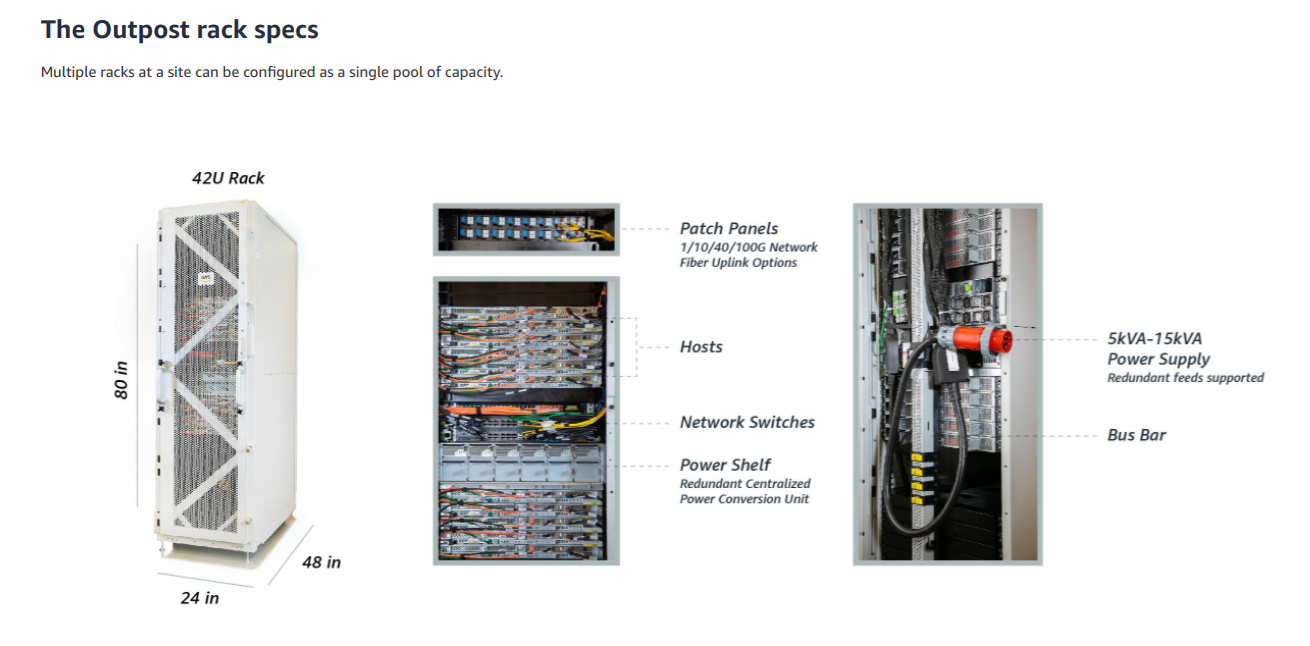
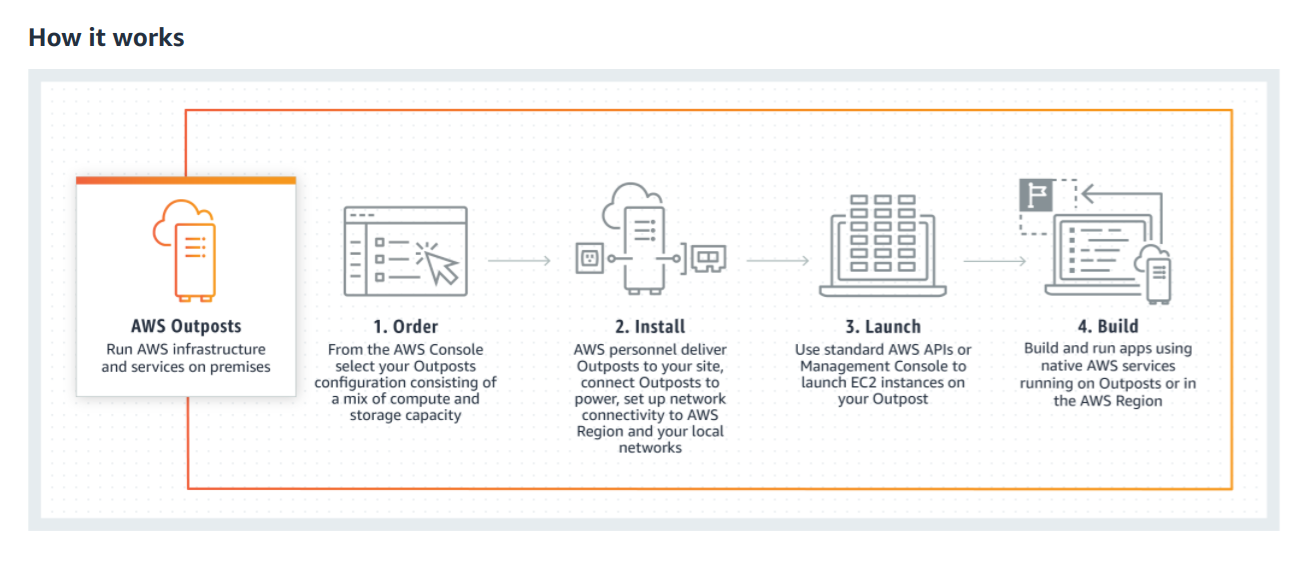
Likewise, AWS Outposts puts AWS servers directly into an enterprise data center, creating yet another way AWS becomes a supplier of edge computing services. “AWS Outposts is designed for workloads that need to remain on-premises due to latency requirements, where customers want that workload to run seamlessly with the rest of their other workloads in AWS,” AWS says.  

AWS Outposts are fully managed and configurable compute and storage racks built with AWS-designed hardware that allow customers to run compute and storage on-premises, while seamlessly connecting to AWS’s broad array of services in the cloud.

Thursday, January 30, 2020

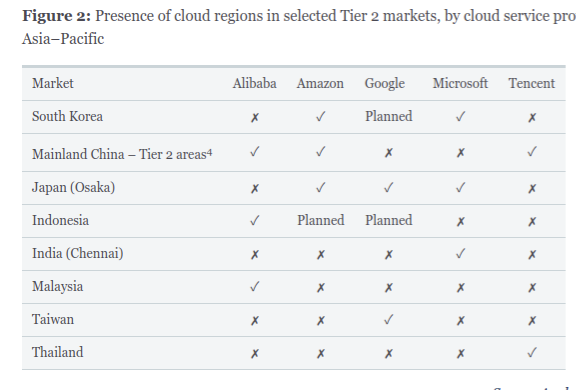
Asia Tier 2 Hyperscale Data Center Growth

To the extent that hyperscale data centers now drive capacity requirements for the global wide area networks, it also stands to reason that new hyperscale data centers in “tier two” locations will drive capacity requirements. 


Wednesday, January 29, 2020

Who Wins at the Edge?

Dean Bubley
Edge computing almost certainly is going to create opportunities, but for whom? Alibaba and China Tower are working to create edge computing services, said Yang Yang, ShanghaiTech University School of Information Science and Technology co-director and professor.

But note something about that partnership: it is the app provider and the tower company that are working to create edge computing, not the connectivity provider. 

Amazon Web Services has partnered with several global telcos to create Wavelengths, an edge computing service using telco real estate. Initial partners include Verizon, Vodafone, KDDI and SKTelecom. But note there that that the edge computing service is supplied by AWS. The telco role is connectivity and rack space. 

image1
Yang Yang
AT&T seems, at least initially, to favor a prioritized routing approach for enterprise data centers, essentially staying out of the colocation space. Another version of the AT&T service has Microsoft Azure supplying the edge computing, colocated inside enterprise data centers. 

The point is that multi-service edge computing might wind up being a smaller business for connectivity providers than had seemed possible a few years ago. 

image1
John Ghirardelli
How much change will 5G bring to the rest of the internet ecosystem?  “Less than you think” or “almost everything” are the range of expectations for 5G expressed at a PTC’20 panel on 5G implications. Much hinges on which part of the ecosystem one examines. 

Mobile network physical infrastructure will change, but the business model could change even more. 5G will have the greatest and early impact on the telecom industry itself, argued Dean Bubley, Disruptive Analysis owner. New providers will emerge, including wholesale roles, private 5G operators and enterprise 5G networks as well, he says. 

image1
Ramy Katrib
The physical layer changes might be least revolutionary. “5G is just another evolution of the ecosystem, using a wider range of frequencies, more fiber, bringing new entrants into the space and expanding the ecosystem,” said John Ghirardelli, American Tower Corporation director. 

On the other hand, there are many new technologies, including MIMO, network slicing and edge computing, said Yang,

Dense small cell networks with fiber extensively and deeply deployed are some other changes 5G will bring.

image1
Gary Kim
Applications and business models might be where the greatest 5G changes happen. All prior mobile generations were built around human end users on phones. The 5G network is the first where machines, sensors and servers will outnumber phones, and where computers--not people--are the most numerous devices. 

That alone changes the business model from a consumer-driven mobile phone business to an enterprise-focused sensor connection business. In short, enterprise internet of things might drive new revenue, not consumer smartphone use. 

Also, 5G will differ from 2G, 3G or 4G, which served people using intelligent devices, said Yang. In comparison, most 5G device will be “stupid,” requiring computing support at various places in the network, autonomously on devices, someplace in the metro area or remotely. 

Which parts of the computing ecosystem benefit is the big question. It might be easy to suggest that application providers, device suppliers, edge computing as a service suppliers and others might benefit more than connectivity providers. 

But 5G could revolutionize scripted television production, because “a big pain point is connecting video production to the internet,” said Ramy Katrib, DigitalFilm Tree founder and CEO. “We compete with FedEx or physical media,” he said. 

And one key requirement is ensuring data recoverability even if connections are interrupted. “We assume there will be service interruptions,” Katrib said. So a key “killer app” is the assurance that all data is recoverable, even in the face of file transfer interruptions. 

Moving video files straight to editing suites will be revolutionary, Katrib argued. 

And patience might be required. “5G will be really popular by the time 6G arrives,” Yang quipped. “We are early days in terms of edge computing,” said Ghirardelli.

Sunday, January 26, 2020

Verizon and AT&T Initially Take Different Approaches to Edge Computing

With the caveat that each firm might undertake other edge computing initiatives, Verizon and AT&T seem to be taking different approaches to the edge computing business. Verizon seems to have chosen to operate as a supplier of edge rack space and facilities. Verizon also is partnering with Amazon Web Services, which supplies the actual edge computing as a service.

AT&T seemed initially to prefer a version of enterprise edge computing, where AT&T routes traffic differentially based on enterprise priorities, but does not seem to require additional computing functions aside from that provided by the enterprise itself.

But a Microsoft Azure compatible version also seems to be available, where enterprises Microsoft Azure services in edge locations closer to customers and devices. In that scenario, it appears Azure computing services are available locally. 


AT&T colocates routing gear at the enterprise data center and then routes traffic differentially. High-priority, mission-critical data using either Wi-Fi or mobile networks is processed locally and immediately sent back to the appropriate end-point within the customer’s private wireless network environment, rather than being processed remotely. 


It is possible, perhaps even likely that other edge initiatives also will be developed be each firm. 

Thursday, January 23, 2020

Enterprise Workloads Now 79% Cloud

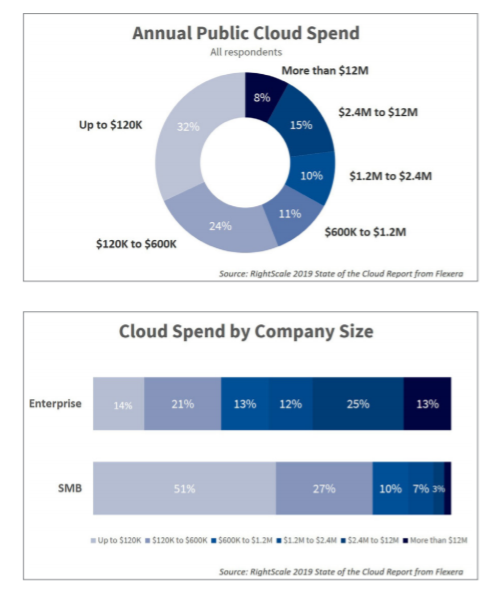
Public cloud spend is quickly becoming a significant new line item in information technology budgets, especially among larger companies, a survey sponsored by RightScale suggests. 

Among all respondents, 23 percent spend at least $2.4 million annually ($200,000 per month) on public cloud while 33 percent are spending at least $1.2 million per year ($100,000 per month). 

Among enterprises the spend is even higher, with 38 percent exceeding $2.4 million per year and half (50 percent) above $1.2 million per year. 

Small and medium businesses generally have fewer workloads overall and, as a result, smaller cloud bills (just over half spend under $120,000 per year). However, 11 percent of SMBs still exceed $1.2 million in annual spend, RightScale says. 


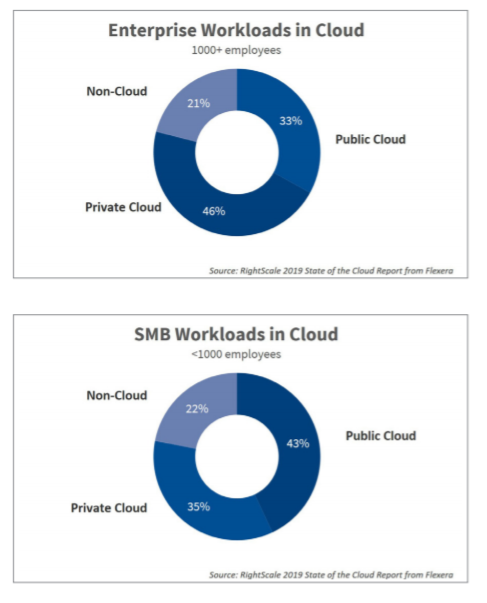
Enterprise respondents run 79 percent of workloads in cloud, with 38 percent of workloads in public cloud and 41 percent in private cloud. Workloads running in private cloud may include workloads running in existing virtualized environments or bare-metal environments that have been “cloudified,” says RightScale. 

Non-cloud computing comprises about 21 percent of respondent workloads. 

Small and mid-sized businesses report running 43 percent of workloads using public cloud and also run 35 percent of workloads on private cloud. Some 22 percent of workloads remains on non-cloud platforms. 
source: RightScale

Public Cloud Spending Will Grow 17% in 2020

These days, cloud computing is simply part of computing. According to the Rightscale 2019 State of the Cloud report, 94 percent of enterprise information technology respondents use cloud computing

Some 84 percent of enterprise respondents have a multi-cloud strategy. Hybrid cloud is used by 58 percent of enterprises.

Public cloud adoption is 91 percent and private cloud adoption is 72 percent. About 69 percent of respondents use at least one public and one private cloud. 

So it should not come as a surprise that the worldwide public cloud services market is forecast to grow 17 percent in 2020 to total $266.4 billion, up from $227.8 billion in 2019, according to Gartner.

Software as a service (SaaS) will remain the largest market segment, which is forecast to grow to $116 billion next year due to the scalability of subscription-based software.

The second-largest market segment is cloud system infrastructure services, or infrastructure as a service (IaaS), which will reach $50 billion in 2020. IaaS is forecast to grow 24 percent year over year, which is the highest growth rate across all market segments. 

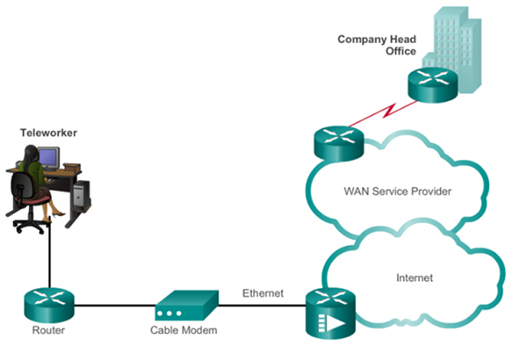
The notion of “cloud” has been a standard part of computing network diagrams for many decades, denoting computing resources “somewhere else” that are not under the ownership or control of any single enterprise. 

Just as specific symbols are used on network diagrams to show the elements of an enterprise network, so the “cloud” symbol simply represents other existing wide area network assets not owned or controlled by an specific end user organization. 


               Worldwide Public Cloud Service Revenue Forecast (Billions of U.S. Dollars)

2018
2019
2020
2021
2022
Cloud Business Process Services (BPaaS)
41.7
43.7
46.9
50.2
53.8
Cloud Application Infrastructure Services (PaaS)
26.4
32.2
39.7
48.3
58.0
Cloud Application Services (SaaS)
85.7
99.5
116.0
133.0
151.1
Cloud Management and Security Services
10.5
12.0
13.8
15.7
17.6
Cloud System Infrastructure Services (IaaS)
32.4
40.3
50.0
61.3
74.1
Total Market
196.7
227.8
266.4
308.5
354.6


Monday, January 20, 2020

How Big a Role for Telcos in Edge Computing?

The new Amazon Web Services Outposts “delivers fully managed AWS infrastructure, native AWS services, APIs, and tools to virtually any customer on premises facility,” AWS says. That makes it an important development in edge computing, edge computing as a service and illustrates the decisions connectivity service providers will have in building a relevant role in edge computing. 

Mobile edge computing and multi-service edge computing (fixed networks) rightly are viewed as potential revenue sources for connectivity providers. But it remains quite unclear what specific connectivity provider roles are possible. 

That especially is true now that some cloud giants such as Amazon Web Services are rolling out their own edge computing services that create edge computing nodes inside enterprise data centers or telco facilities. 

Rack space might be a nice add-on business, but it is not the revenue stream edge computing on demand should represent. 

“Customers have been asking for an AWS option on-premises to run applications with low latency and local data-processing requirements,” AWS says, and AWS Outposts is a service that brings the same infrastructure, APIs, and tools that customers use in AWS to virtually any customer on-premises facility. 


“One of the most common scenarios is applications that need single-digit millisecond latency  to end-users or onsite equipment,” says AWS. 

The point is that it remains unclear how many roles connectivity providers will wind up occupying as edge computing becomes more established. Roles might be more limited, in practice, than many had hoped.