Wednesday, March 31, 2021

Private 5G is a LAN Market, With All that Implies for Edge

The global private 5G market is better evaluated as representing sales of  local area network infrastructure than connectivity provider services, even if there is overlap between the two markets. 


Private 5G and private 4G also are going to be associated with edge computing, as such networks will be installed to support on-premises data devices and workloads. Whether for process control or other value-enhancing functions, private networks often will be viewed as valuable for the ability to assess trends in real time or nearly in real time, without delay.


The 5G portion of the private networks market is estimated to be $924 million in 2020, growing at a 40-percent compound annual growth rate to 2028, when annual sales might reach $13.92 billion.  


That is best underwood as the value of infrastructure products and services sold to enterprises running such networks, even if there will be some connectivity provider revenue when acting as system integrators, and a bit of additional connectivity revenue overall. 

source: Polaris Market Research 


Thursday, March 25, 2021

75% of Enterprise Data Created at the Edge by 2025?

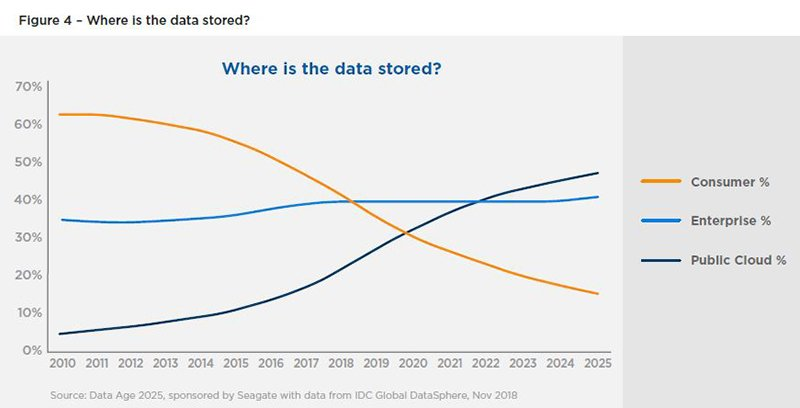
Data created in the cloud is not growing as fast as data stored in the cloud, and data creation at the edge is growing almost as fast as that in the cloud, according to IDC. Others have argued data creation increasingly moves to the edge over time.


Gartner, for example, projects that 75 percent of enterprise data will be created at the edge by about 2025.


“In 2020, 64.2 ZB of data was created or replicated, but less than two percent of this new data was saved and retained into 2021,” IDC says. Most of that new data was ephemeral (created or replicated primarily for the purpose of consumption) or temporarily cached and subsequently overwritten with newer data.IDC says. 


The growth is mostly concentrated in public cloud facilities, though. IoT data (not including video surveillance cameras) is the fastest-growing data segment, followed by social media.

source: IDC 


“The amount of digital data created over the next five years will be greater than twice the amount of data created since the advent of digital storage,” said  said Dave Reinsel, IDC SVP.


IDC predicts global data creation and replication will experience a compound annual growth rate of 23 percent through 2025. Data storage will grow at a five-year CAGR of 19.2 percent. The installed base of storage capacity reached 6.7 ZB in 2020, IDC notes. 


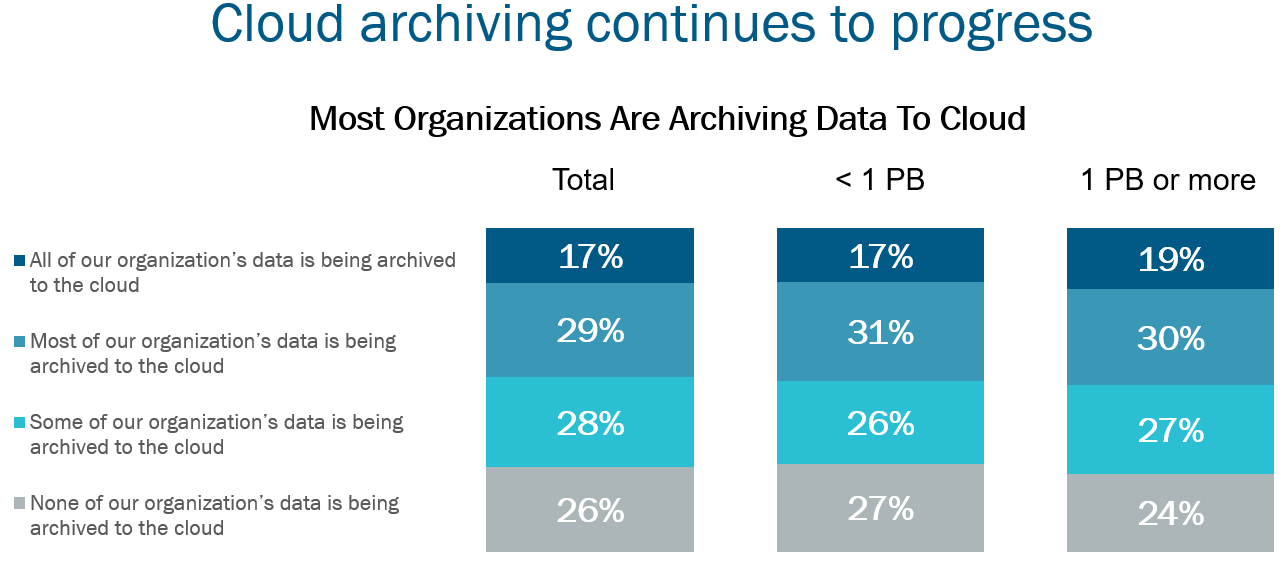
Archiving of data in the cloud also is increasing, others note. 


source: 451 Alliance 


Tuesday, March 23, 2021

Equinix BX-1 is Modular, Has Implications for Edge

The new Equinix data center in Bordeaux, France, expected to go commercial in the third quarter of 2021, will also serve as a landing hub for the new submarine cable AMITIE, connecting France to the United States and Great Britain. 


The Bordeaux data center will launch with one megawatt of power capacity and 220 cabinets of equipment.The BX-1 site is due to provide colocation space of approximately 32,000 square feet (3,000 square meters), with a maximum of 1440 cabinets. 


BX-1 will have direct fiber links to Equinix's International Business Exchange sites in Paris, and also features a modular design that is expected to be used elsewhere at Equinix edge sites. 


Aside from reduced costs, the new modular design also allows Equinix to position data centers in areas where growth is expected, but where a more-traditional facility does not make commercial sense at the moment. BX-1 combines the functions of a cable landing station with a retail colocation space, for example.


Singtel, Optus Opt for AWS Outposts for MEC

Singtel and Optus have chosen to embed Amazon Web Services capabilities into their Multi-access Edge Compute (MEC) infrastructures using AWS Outposts. It is not immediately clear why Singtel chose to use the AWS Outposts platform, rather than the AWS Wavelengths platform. 


Outposts gear is managed directly by AWS, but that should also be true for Wavelengths deployments. 


AWS Outposts provides the full suite of AWS tools and services on the premises in a self-contained rack. AWS Wavelengths puts AWS servers inside a telco facility. Perhaps Singtel simply preferred the footprint, capacity and ease of using Outposts, rather than using Wavelengths. 


Outposts supplies a rack of servers managed by AWS but physically on-premises. In Singtel’s case that is its own facilities. 


Presumably Singtel provides the power and network connection, but everything else is done for them. If there is a fault, such as a server failure, AWS will supply a replacement that is configured automatically. Outposts runs a subset of AWS services, including EC2 (VMs), EBS (block storage), container services, relational databases and analytics. S3 storage is promised for some time in 2020. 


Use of AWS Outposts also requires certain loading dock, connectivity and other physical requirements that Singtel and Optus might have concluded was easier to standardize if provided at telco facilities. 


Perhaps ensuring adequate facilities also is a requirement. But Singtel also says it can deploy the MEC with AWS Outposts to the customer’s location, especially for use cases where confidential data must be kept, or preferably is retained, on the customer premises.

Friday, March 12, 2021

Verizon Sees $30 Billion Addressable Opportunity for Multi-Access Edge Computing

Verizon Business believes the edge computing market it can address is worth $1 billion by the end of 2021 and will grow to $10 billion by 2025. 


Verizon’s public multi-access edge computing approach builds on a partnership with Amazon Web Services. The AWS Wavelength service makes the one-million AWS developer community available to the nearly 170 million end-devices across Verizon’s 4G and 5G networks at the edge, the company says. 


The AWS Wavelength deal has Verizon supplying the edge real estate while AWS supplies the compute platform. Both Verizon and AWS get recurring revenue share from client workloads at the edge.  


Verizon’s private MEC service is built on a partnership with Microsoft. The Verizon Private Edge service combines Microsoft Azure cloud and edge computing with 5G on the customer premises. Verizon says that will create a connectivity opportunity reaching $10 billion by about 2025. 


Verizon Business also expects to develop enterprise solutions in logistics, predictive maintenance, robotics and factory automation, which Verizon estimates are a $12 billion opportunity by 2025 with partners such as IBM, Cisco, Deloitte and SAP.


Altogether, Verizon estimates demand for MEC services is a market that exceeds $30 billion by 2025, though not all the revenue can be harvested by Verizon, as other partners will gain. Many would argue most of the revenue will be gained by the partners.


Wednesday, March 10, 2021

30% of Cloud Spending is Wasted

As much as 30 percent of cloud computing spending is wasted, a 2020 study by Flexera found. confirms the figure, noting that “61 percent of organizations plan to optimize cloud costs in 2021, making it the top initiative for the fifth year in a row.”


Some 55 percent of respondents say understanding the cost implications of software licenses is a top cloud challenge, as well. Users are leveraging automated policies to shut down workloads after hours (49 percent) and rightsize instances (48 percent), says Flexera. 


While as-you-use-it, consumption-based pricing has the potential to be more cost-effective than on-premises infrastructure strategies, organizations that plan poorly and fail to properly monitor their cloud environments can quickly see costs spiraling out of control, says Splunk. 


The primary issue often relates to poor visibility into how cloud instances and services are used, Splunk says. Many organizations allow decentralized groups to procure and manage their own cloud environments. 


While this strategy gives these individuals or teams the autonomy needed to experiment and tailor the environment to their needs, it also leads to significant gaps in oversight, Splunk notes. Services may be overprovisioned, licenses may go unused, and cloud servers may be unnecessarily duplicated. 


None of that is likely to slow the shift to cloud computing, though it will increase the attention paid to rationalizing cloud purchases. 


Edge Processing Will Still Use Remote Bulk Storage

Edge computing has value in part because some use cases require ultra-low latency or  predictable response times. Edge computing might also make sense because and in part some use cases do not require lots of remote computing, only bulk storage. 


In other cases, most of the data generated by sensors locally offers no analytical insight, so does not produce value when transported across WANs for real-time processing. That should eventually begin to affect the amount of data processed locally versus remotely, with the exception of archival storage, which might disproportionately move to remote locations. 


In the past, some organizations hesitated to put certain types of data in public clouds, representing a form of edge storage


The 2021 Flexera survey continues to show an evolution of end user thinking on that score. More than half of respondents said they’ll consider moving at least some of their sensitive consumer data or corporate financial data to the cloud. 


Some 23 percent of respondents report that internet of things or other edge data will remain on the premises or mostly so. About 31 percent say data storage will be a mix of premises and remote, while 46 percent say data storage will be mostly or all in the remote cloud. 


source: Flexera


Virtualized 5G Networks Will Mix "Inside" and "Outside"

Virtualized telecom networks are going to “look” quite different from the legacy “closed” networks of yesterday. As native 5G networks, for example, are virtualized, they also will use public cloud infrastructure “inside” the core network. 

source: Heavy Reading 


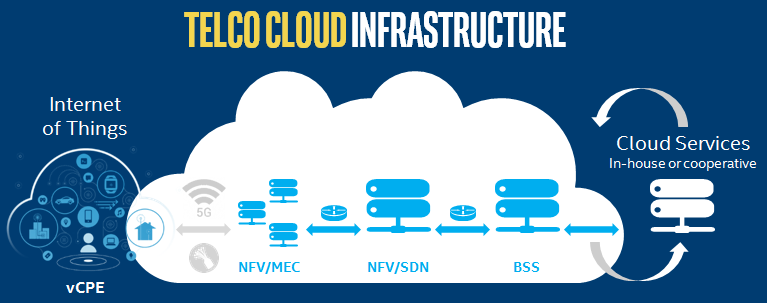
Half a decade ago, the new virtualized core might have been described as including the traditional “telco” functions as abstracted using network functions virtualization or software defined network approaches. 


The point is that the abstracted functions were still supported “inside” the telco’s core network, with end user customer premises equipment “outside” the network, and “applications” supported either “inside” the telco domain or “outside” in the form of applications supported by third party computing platforms. 


source: Intel 


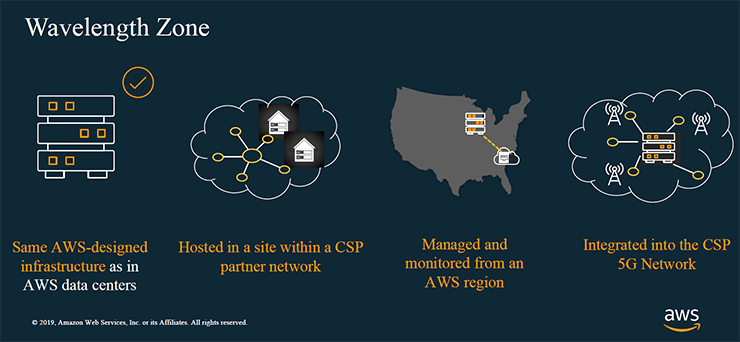
The Amazon Web Services “Wavelength” infrastructure, however, locates AWS computing facilities “inside” the telco network. AWS services are integrated into the other 5G services, for example, but represent a move of AWS computing services “inside” the telco network.

source: AWS 


Saturday, March 6, 2021

Microsoft Mesh and Edge Computing


It is hard to imagine immersive virtual reality working well without using edge computing. 

Friday, March 5, 2021

Most Mobile Operators Might Find Edge Computing Most Valuable to Support 5G

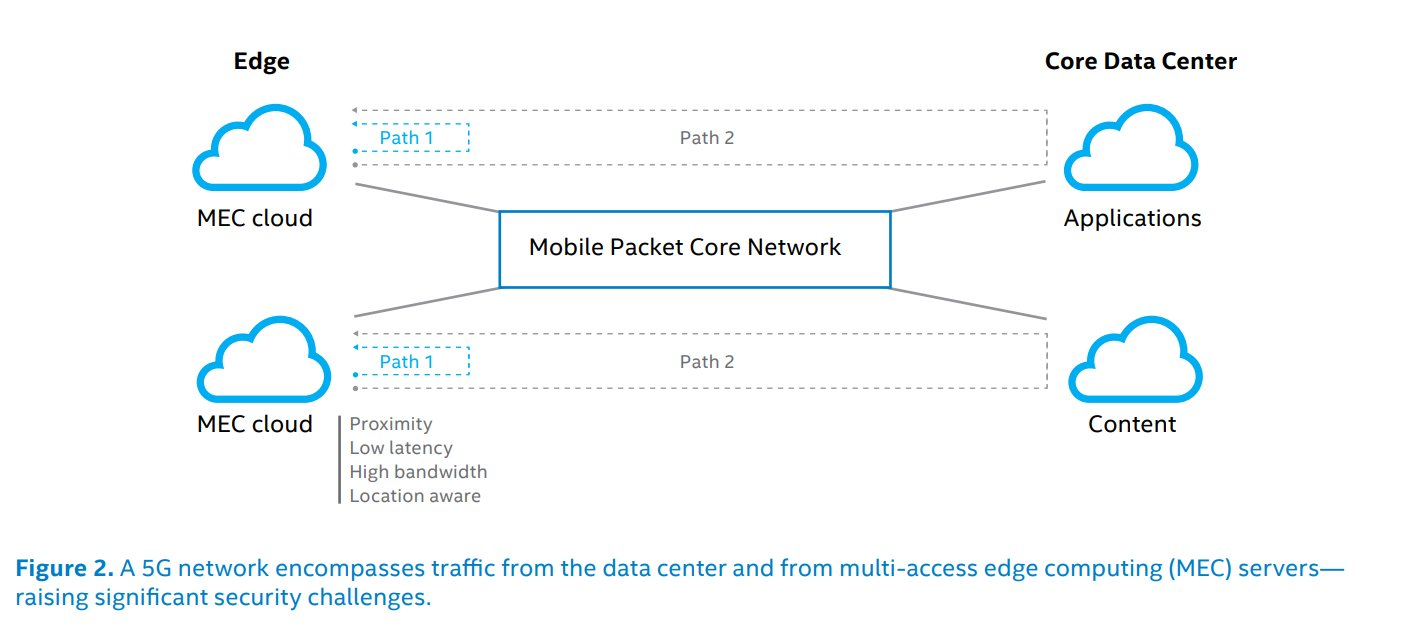
Mobile operators are likely to find the value of edge computing for internal use driving higher value than edge computing as a service offered to retail or wholesale customers. To the extent that 5G is supported by a virtualized core network incorporating edge computing, one might attribute the value of 5G connectivity revenues to the 5G edge computing infrastructure, even if none of those facilities support retail edge computing customers. 


source: Intel 


In the 5G era, essential network computing functions will be conducted at the edge of the network, not entirely in the core, as was pre-internet telecom network architecture. Network slicing, for example, will require edge computing at the radio sites. That cloud native architecture also will use virtualized and edge resources.

Saturday, February 27, 2021

IoT for Tourism and Travel

Tourism is not the same thing as “travel,” but internet of things use cases will be found in both. Think of travel as “getting from one place to another,” while tourism is “travel to a destination for fun or work.” You may think of travel as a component of tourism, or tourism as a subset of reasons to travel. 


Either way, the ecosystem involves airlines, ground transport, hotels and accommodation, restaurants, food and beverage, attractions, entertainment and shopping. IoT applications can improve traveler or tourist experience, create more sustainable and pleasurable tourism and improve the effectiveness and efficiency of all support infrastructures and services underpinning travel and tourism. 


About 86 percent of airline industry information technology professionals believed the internet of things will provide benefits “within three years,” a 2015 survey conducted by SITA suggested. That arguably proved true if one considers a consumer smartphone, tablet or smart watch an IoT device. Personalization of the passenger experience was an early initiative.  


Flight status updates are one example of the passenger use case, while check-in personnel, baggage handlers and ramp staff provide examples of employee use cases. 


By the time of the 2019 survey, artificial intelligence had become a stated area of concern. The 2020 report on passenger use of airline travel technology showed widespread use of personal devices for booking, checkin and dwell time functions. Again, some might quibble about whether tablets and smartphones--though connected devices--represent “IoT” use cases.  


Many would argue use of IoT is part of the larger digital transformation of airline travel, including smart luggage and use of beacons to support travelers. Many of us would argue the coming important IoT innovations will come from use of sensors (not consumer devices) applied to the other passenger operations sides of the business, such as analytics on food and beverage consumption, seat pitch, seat belt condition (on or off), seat wear and tear, restroom monitoring and other elements of the actual in-flight experience.  


Of more immediate and obvious value are the use of sensors to detect mechanical issues before they happen. Equipment monitoring has been found to reduce delays by about 20 percent, for example.  


Expected use cases include in-room tablets that enable guests to personalize and adjust room temperature, control TV, elevators, and heaters, turn lighting on and off, schedule wake up calls. 

Electronic key cards on guest smartphones, allowing them to check-in without anyone’s assistance, as well as smart locks also are expected use cases.


 Real-time information already is a use case, but IoT applications will help travellers change flights and make connecting flights. Directions to gates at the airport, instructions on how to board a flight and information security checks will be IoT-enabled.  


In flight, sensors might be embedded in the seats inside the aircraft that can measure the anxiety level, heart rate, body temperature, hydration level of travellers, allowing the cabin staff to react to passenger needs. 


IoT will streamline the day-to-day operations of airports in areas such as baggage handling and personalization. 


IoT will support automation of many crucial business functions of travel and hotel businesses, including everything connected with supply chains and back-end support operations, such as maintenance. 


Tourist experience, probably based on apps available on their smartphones, also are likely to become common.


IoT and Edge are Virtually Inseparable

It is almost impossible to clearly separate the value of internet of things from the value of edge computing, as the one generally drives the other. The value of sensor data, though, mostly hinges on the analytics. 


Insights gleaned by analytics is the driver of value produced by internet of things sensors, but a fraction of the data is likely to  produce most of the value. Alarms and control of processes are the common use cases. 


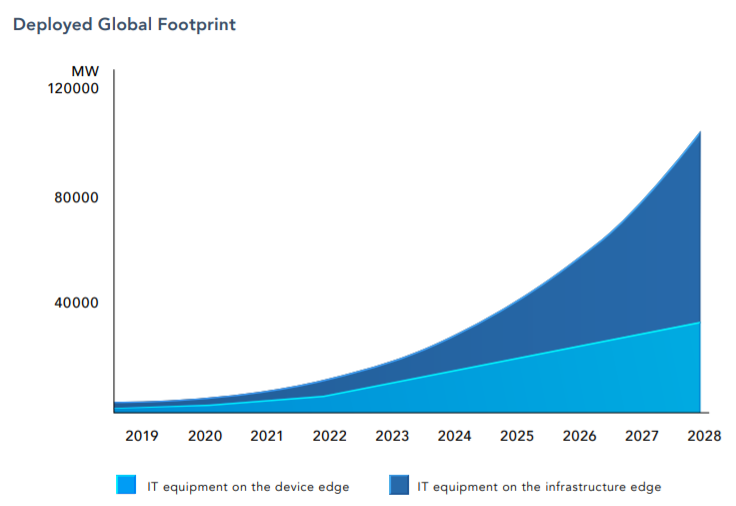
By perhaps 2028, the greatest single area of edge infrastructure investment will have been made to support mobile customers and residential consumers. 


source: State of the Edge 


Key applications include infotainment. In fact, infotainment might represent between 29 percent and 47 percent of the global edge footprint between 2019 and 2028, the report says. 


Smart appliances might represent 19 percent of the edge footprint between 2019 and 2028. Security with an edge footprint will increase from 10 to 16 percent. 


The footprint for energy management is forecast to increase from 10 to 16 percent. Edge computing facilities also will play a role in assisted living, at two to five percent of the total edge capability, between 2019 and 2028.


“For example, on an oil rig that has 30,000 sensors, only one percent of the data are examined,” McKinsey consultants say. Most of the data is used to detect and control anomalies--a valuable function, to be sure. 


source: State of the Edge 


On the other hand, optimization and prediction might provide the greatest value, say James Manyika, Jonathan Woetzel, and Richard Dobbs McKinsey Global Institute directors; Michael Chui, partner; Peter Bisson, director in McKinsey’s Stamford office; Jacques Bughin, director in the Brussels office and Dan Aharon, consultant in the New York office.


 source: State of the Edge 


Thursday, February 25, 2021

Mobile Operator Virtualization and Edge Computing are Inseparable

One big change telecom operator core networks are making is virtualization: the functional separation of applications and software from hardware platforms. At the same time, 5G core network virtualization requires use of edge computing. At this point, virtualization and edge computing require each other.


That allows use of commercial, off the shelf hardware, which provides capital investment and operating cost advantages and sometimes greater simplicity. Increasingly, it also is possible to abstract the hardware platforms as well, using cloud computing supplied by third parties. 


Since March 2020, Google Cloud has been developing a 5G strategy for mobile operator networks, aiming to sell Google Cloud computing as the fabric for virtualized 5G network operations. 


Google Cloud and Intel now have announced they have a platform for supporting virtual radio access networks or open RAN operations. 


You might think of this as one way edge computing is going to develop with 5G, or a way virtualized network processes will be supported, computationally. 


One might also see this as another example of telco or enterprise computing virtualization, open network standards and use of commercial off-the-shelf hardware, open source and abstracted functions using application programming interfaces. 


The collaboration uses Google Cloud's Anthos application platform and Intel cloud-native platforms and solutions, including Intel's cloud-native Open Network Edge Service Software (OpenNESS) deployment model. 


Google already had created mechanisms to support application operation at the edge, using Anthos.


Such abstraction of the computing functions supporting core networks illustrates the way telcos themselves will be potential customers of cloud computing service providers. 


But it also is, at the same time, part of the adoption of edge computing.